// Blog post
Choosing Packaging for Supplements That Protects Shelf Life and Stability
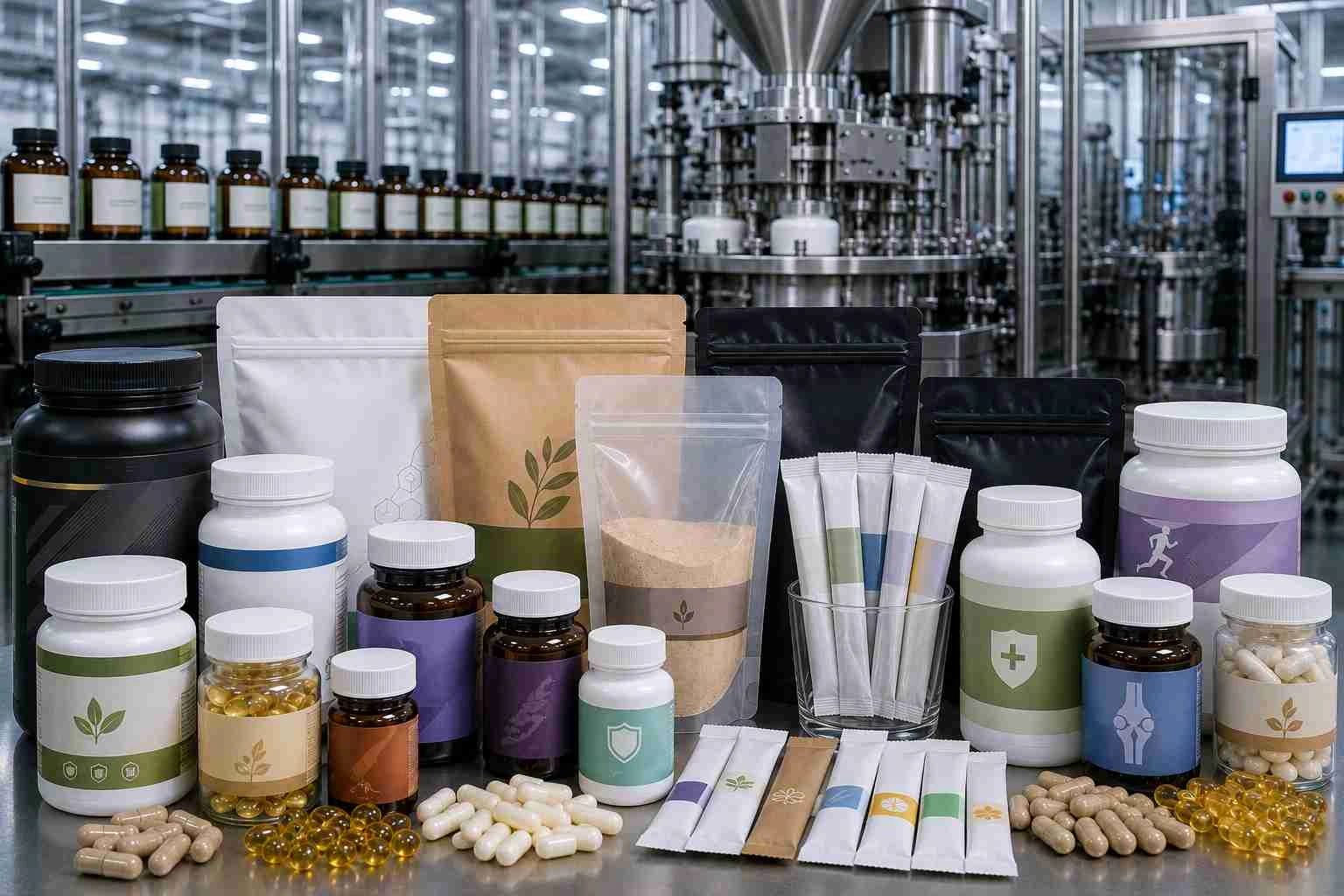
Table of Contents





Recent Posts
Popular posts
Certifications






Supplements are only as good as the container they arrive in. A well-formulated product can still fail a consumer if it degrades before the expiration date on the label. That gap between intended shelf life and real-world stability often traces back to packaging for supplements decisions made early in the product development process. At F.A.M.E. Health Labs, an FDA-registered, cGMP-certified contract manufacturer, packaging decisions are built into the manufacturing workflow from day one.
Why Packaging for Supplements Plays a Critical Role in Product Stability
Supplement ingredients are chemically active, which makes them vulnerable. Some degrade under light. Some absorb water from the surrounding air. Others react with oxygen over time. The right container keeps those threats out long enough for the product to reach a consumer and actually work.
There is also a regulatory dimension that brands cannot ignore. The FDA in the US and UK food supplement regulations overseen by the Food Standards Agency (FSA) and local authorities expect that a product meets its label claims throughout its stated shelf life. Packaging that cannot protect the formula makes that compliance target harder to reach.
Types of Packaging for Supplements
Supplement formats are not uniform, and neither are the containers built to hold them. The right vessel depends on what is inside, how it will be shipped, how long it must remain stable, and who the end consumer is.
1. HDPE & PET Bottles
High-density polyethylene (HDPE) and polyethylene terephthalate (PET) are the most widely used materials in the supplement industry. HDPE is opaque, moisture-resistant, and the standard choice for capsules and tablets. PET is lighter and offers product visibility, making it suitable for many powders, liquids, and some solid-dose supplements where barrier requirements are appropriately matched to the formulation. Both accept child-resistant closures and induction seals, which most retailers now expect.
2. Blister Packaging
Blister formats deliver individually sealed doses, well-suited for custom packaging for health supplements where precise dose control matters. Each cavity is sealed independently, so the remainder of the product is not exposed each time the consumer takes a dose. This format is standard in UK pharmacy channels and is gaining traction in certain premium US supplement segments.
3. Stick Packs & Sachets
Single-serve supplement packaging in stick or sachet form suits powdered formulas, electrolyte blends, and functional beverages. These formats are portable, portion-controlled, and carry a lower cross-contamination risk than shared containers. Laminate films can be specified for high-barrier performance. They are viable for sensitive ingredients when the right film structure is selected.
4. Glass Bottles
Glass is highly chemically inert and resistant to leaching, making it a reliable choice for liquid supplements and tinctures. Amber glass adds light protection for photosensitive formulas. The practical trade-off is shipping weight, worth considering for brands distributing to UK markets or shipping internationally.
5. Pouches & Flexible Packaging
Multi-layer laminate pouches are a practical option for bulk powders and sports nutrition formats. Foil-laminated structures deliver strong oxygen and moisture barriers. This makes them workable for nutritional supplement packaging where extended shelf life is a priority. Resealable zippers improve the consumer experience for products used across multiple sessions.
Barrier Properties to Look for in Packaging for Supplements
The material a container is made from determines what it lets in and what it keeps out. Barrier specifications should be matched to formulation requirements, not selected by default.
1. Moisture vapor transmission rate (MVTR): Low MVTR is important for hygroscopic ingredients like magnesium and ashwagandha, which pull water from the surrounding air.
2. Oxygen transmission rate (OTR): Products with antioxidant-sensitive compounds or oil-based ingredients need containers with controlled oxygen permeability.
3. Light transmission: Amber glass, opaque HDPE, and UV-blocking films each offer different levels of light protection for photodegradable vitamins and botanicals.
4. Chemical compatibility: The container must not react with what is inside it. This becomes particularly relevant with acidic formulations and botanical extracts.
5. Desiccants and induction seals: These are not add-ons. They are standard tools that support stability and satisfy tamper-evidence expectations in both regulatory environments.
Regulatory & Compliance Considerations
Packaging in the supplement space carries documented legal obligations in both the US and UK. Understanding what each market requires before finalizing container and label specifications saves costly reformatting later.
1. FDA 21 CFR Part 111 requires dietary supplement manufacturers to set specifications for packaging and labeling materials and verify that finished products conform to those specifications.
2. cGMP standards require packaging lines to operate under controlled conditions, with documented procedures to prevent contamination and product mix-ups.
3. The UK Food Supplements Regulations 2003, retained after Brexit, set labeling and compositional requirements, and packaging must support label claim accuracy across the stated shelf life.
4. Child-resistant closures are legally required in the US under the Poison Prevention Packaging Act for iron-containing products above specified thresholds and are considered best practice for many ingestible supplement formats.
5. Label durability is a practical compliance factor. Adhesive selection affects whether a label survives humid storage and remains readable at the point of use throughout the product’s life cycle.
Sustainability Trends in Supplement Packaging
Consumer expectations around packaging sustainability have shifted from preference to purchasing behavior. Brands that can demonstrate responsible choices in their custom supplement packaging are better positioned with buyers who pay close attention in both the US and UK.
- Post-consumer recycled (PCR) content in HDPE bottles reduces reliance on virgin plastic without significant performance trade-offs.
- FSC-certified paperboard for outer cartons and folding boxes carries a certification that resonates with environmentally aware consumers.
- Right-sizing containers to actually fill volumes reduces material use and lowers shipping emissions.
- Mono-material structures are easier to recycle than multi-layer composites, an active development area for flexible formats.
- Refillable formats in glass or aluminum are being explored by some premium brands to reduce single-use packaging volume over time.
These sustainability choices must still be balanced against the barrier performance required to maintain product stability.
Common Packaging Mistakes That Reduce Shelf Life
Most packaging-related stability failures build slowly from decisions that seemed reasonable at the time.
- Selecting packaging based on price alone often leads to barrier properties insufficient for the formulation. Stability test failures and reformulation costs tend to exceed the savings.
- Omitting desiccants for hygroscopic products is a common oversight. Minerals, certain amino acids, and probiotics need active moisture management inside the container.
- Excessive headspace increases the volume of trapped oxygen in contact with the product, accelerating oxidation in sensitive formulas.
- Testing only under static conditions can miss what happens during real-world transit, particularly for transatlantic shipments with variable temperature and humidity exposure.
- Inconsistent closure torque affects seal integrity. Properly calibrated, automated capping equipment addresses this at the manufacturing level.
How to Choose the Right Packaging Partner
The manufacturer who handles packaging for supplements has direct influence over product stability, regulatory compliance, and shelf life outcomes. Credentials and process visibility matter as much as price.
- FDA registration and cGMP compliance are the baseline for any manufacturer supplying the US supplement market.
- Stability testing support helps brands back shelf life claims with real data rather than assumptions. Our stability studies are run by CURI, our ISO 17025 sister lab on the same campus.
- Dual-market labeling knowledge reduces compliance errors when a brand operates in both the US and UK, where label requirements differ in meaningful ways.
- Supply chain transparency for packaging components means knowing whether material suppliers meet the same quality standards as the manufacturing facility.
- Integrated operations covering formulation, filling, and packaging under one roof reduce handoffs and improve overall traceability across the entire production process.
Getting Packaging Right from the Start
Packaging is not the final step in bringing a supplement to market. It is a decision that shapes whether the formula inside reaches the consumer as intended. Regulatory frameworks in both the US and UK reflect this, because packaging failures have real consequences for product efficacy and consumer safety.
F.A.M.E. Health Labs treats dietary supplement packaging as part of the manufacturing process, not separate from it. Operating from a fully integrated, FDA-registered, SQF- and cGMP-certified facility in Georgia, our team works with brands across the full production cycle, including packaging selection, specification, and label and packaging design support, with the same compliance standards applied to containers as to the formulas they protect.
Frequently Asked Questions (FAQs)
Q.1. Why is packaging for supplements important?
Packaging for supplements protects active ingredients from moisture, oxygen, light, and contamination that degrade them over time. It also carries a compliance function, supporting label claim accuracy throughout a product's stated shelf life.
Q.2. What type of packaging is best for supplements?
The best option depends on the formulation, format, target market, and shelf life requirements. HDPE bottles are standard for capsules and tablets. Blister packs suit dose-controlled products. Stick packs work well for single-serve powders. A manufacturer with formulation experience can help match the right container to the product.
Q.3. How does packaging affect supplement shelf life?
Barrier properties determine how effectively a container resists the environmental factors that cause degradation. Insufficient moisture or oxygen protection can cause a product to fall below its labeled potency before the printed expiration date, creating both a consumer trust issue and a compliance exposure.
Q.4. What materials are commonly used in packaging for supplements?
HDPE and PET plastics, glass, aluminum foil laminates, and paperboard for secondary cartons are the most widely used materials. Each has different barrier characteristics, weight, and recyclability profiles.
Q.5. How does packaging influence consumer perception and brand trust?
Packaging is the first physical contact a consumer has with a supplement brand. Tamper-evident closures, legible labeling, child-resistant caps, and quality materials each signal that a brand takes product safety seriously. In a market where consumers pay closer attention to what they ingest, the container sets expectations before the product is ever opened.
// Our Services
What Do You Need?
Select the service that matches your need. Each card expands to show what's included, minimum orders, and certifications then routes you directly to the right section of the form below.

F.A.M.E. Health Labs
Contract Manufacturing
Full-service supplement manufacturing from stock to custom white label, private label, co-manufacturing, and bulk.
See Services






F.A.M.E. Ingredients
Ingredient Sourcing
Global raw material sourcing, proprietary blend development, MOSA Organic, Halal and Kosher flavor systems.
See Services


Curí Inc.
Testing & CRO
ISO/IEC 17025 accredited testing ingredient and finished product. COAs accepted globally by FDA, Health Canada, and EU.
See Services


F.A.M.E. Complete
Enterprise Partnership
Full-platform commercial partnership for high-volume brands. Dedicated team, VP-level account management, real-time portal.
See Services