// Blog post
From Powder to Performance: How Advanced Tablet Compression Ensures Quality, Consistency, and Compliance
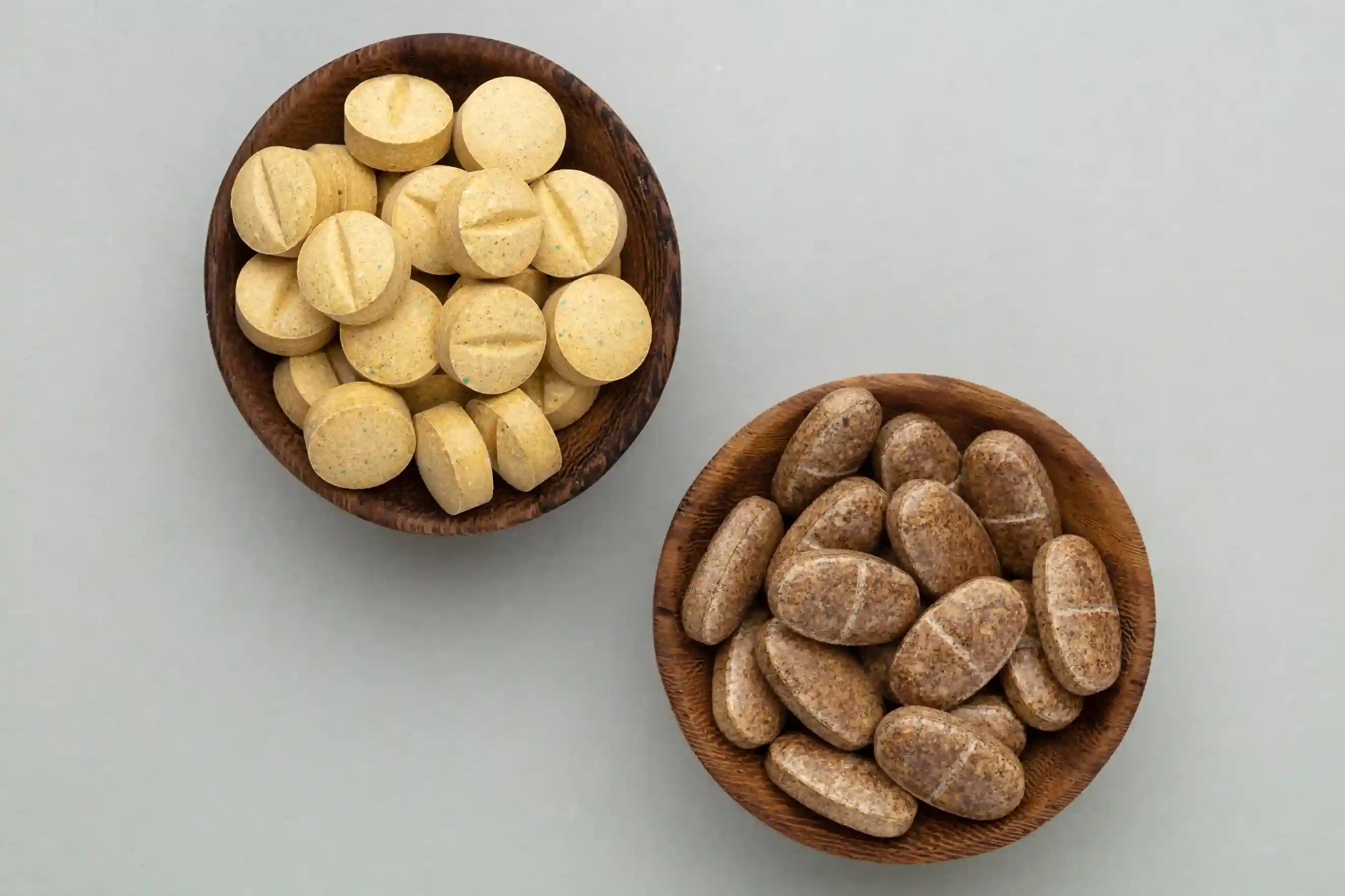
Table of Contents






Recent Posts
Popular posts
Certifications






Turning raw powder into a well-made compressed tablet is one of the more demanding jobs in supplement manufacturing. Advanced tablet compression technology plays a vital role in ensuring that every product meets rigorous quality, consistency, and compliance standards. It's about making sure that each tablet not only looks the same but also functions effectively, delivering the promised nutritional benefits.
Effective tablet compression is achieved through precise engineering and careful planning, involving the use of sophisticated machinery to apply significant force to the powder mixture. This process ensures each tablet possesses the required structural integrity and uniformity. Maintaining consistency across batches is vital, especially in nutraceuticals, as it directly influences consumer trust and brand reputation.
Understanding the Role of Tablet Compression in Supplement Manufacturing
Tablet compression is a cornerstone of supplement manufacturing, transforming granular materials into a solid dose with precise dosages. It matters for several reasons. One key role is its ability to produce stable, easily consumable products, which facilitates the management of daily dietary regimens for consumers.
Done well, tablet compression keeps the active ingredients evenly distributed, so each tablet delivers consistent nutritional benefits. The process significantly impacts the final product's stability and shelf life, protecting the ingredients from degradation and maintaining effectiveness over time.
In supplement manufacturing, meeting industry standards through advanced tablet compression technology ensures that each tablet is not only safe but also effective. The process reduces variability within batches, achieving uniform weight, thickness, and appearance, which are essential for compliance and consumer satisfaction. That is why compression sits at the center of the tablet manufacturing solutions offered by supplement contract manufacturers.
Key Stages in the Tablet Compression Process
Material Feeding Stage
The material feeding stage is the first critical step in the tablet compression process, where precision and control are key. During this phase, raw ingredients in powder form are carefully fed into the tablet press’s hopper. The feed system must ensure a uniform flow of powder to avoid fluctuations in tablet weight, which can lead to dosage inconsistencies.
Modern presses use feed mechanisms that control the flow and keep the material density consistent. This consistency is vital, as it influences the subsequent stages of weight calibration and compaction. By maintaining a steady and controlled feed, manufacturers can safeguard product quality, maintain compressed tablets’ structural integrity, and reduce the risk of defects. Proper material feeding sets the foundation for a successful tablet compression process, ensuring each batch meets the stringent quality standards required in supplement manufacturing.
Weight Calibration
Weight calibration is an essential stage in the tablet compression process that guarantees each tablet contains the precise amount of active and inactive ingredients. This phase involves adjusting the tablet press settings to ensure the correct powder volume is fed into the die, achieving the desired weight for every tablet.
Weight has to be calibrated accurately, because any deviation changes the dose and affects the tablet's efficacy and safety. Advanced machines used in this stage employ precise sensors and automated feedback systems to continuously monitor and adjust the fill levels, safeguarding consistency throughout production.
Achieving precise weight calibration not only meets regulatory standards but also ensures that the tablets fulfill their intended health benefits. Maintaining this accuracy is key in delivering high-quality compressed tablets, providing customers with reliable products that meet their health supplement needs.
Compaction and Shaping
Compaction and shaping represent the heart of the tablet compression process, where the loose granular material is transformed into a firm, single solid form. During this stage, the filled die cavity containing the blend is subjected to immense pressure from an upper and lower punch. The pressure is set carefully so the powder compacts into a solid, cohesive tablet.
The primary goal of the compaction stage is to ensure the tablet has the necessary hardness without risking breakage, which is critical for handling, packaging, and consumption. Shaping is achieved simultaneously with compaction, influenced by the shape of the punches and dies used in the process. This determines not only the tablet's shape but also its size and embossing, if any.
Getting compaction and shaping right matters because it sets the tablet's mechanical properties, such as friability and disintegration time. These characteristics are vital for consistent product performance and consumer ease of use. Getting compaction and shaping right shows what modern tablet manufacturing solutions can do, reinforcing the importance of precision in delivering superior quality compressed tablets.
Ejection and Collection
Ejection and collection mark the concluding phase of the tablet compression process, where fully formed tablets are removed from the die and gathered for further processing. During ejection, the lower punch rises, pushing the tablet out of the die cavity. This step protects the tablet's structure, since poor ejection can cause chipping or breakage.
Advancements in tablet press technology ensure a smooth and gentle ejection process, minimizing the risk of defects and ensuring high product yield. Once ejected, tablets are directed to the collection system, where they are systematically gathered, typically on a conveyor belt, for subsequent processes like coating or packaging.
The efficiency of ejection and collection is vital for maintaining a steady production flow and ensuring that the tablets remain uncontaminated and intact. This stage is an integral part of producing high-quality compressed tablets, exemplifying how precision and technology in tablet compression and manufacturing interplay to deliver reliable supplement products to the market.
Quality Control Standards in the U.S for Tablet Compression
Hardness and Friability Tests
Hardness and friability tests are fundamental quality control measures in tablet compression that assess the mechanical integrity of compressed tablets. These tests ensure that tablets can withstand the rigors of handling, transportation, and consumption without breaking apart.
The hardness test measures the force required to break a tablet under pressure. This test ensures that the tablet is neither too soft, which might cause it to crumble, nor too hard, hindering its disintegration in the digestive tract. Instruments used for this test provide precise readings, allowing manufacturers to fine-tune the tablet formulation and compression settings.
Friability tests, on the other hand, evaluate a tablet's ability to resist abrasion and chipping. During this test, tablets are tumbled in a rotating drum to mimic the stresses they might encounter. The final weight is then compared to the initial weight to calculate the percentage of weight loss.
Together, hardness and friability tests confirm the tablets are strong enough to arrive intact while still breaking down properly in the body. These tests are critical for maintaining the quality and consistency of compressed tablets, reflecting the commitment of tablet manufacturing solutions to meet stringent industry standards.
Disintegration and Dissolution Checks
Disintegration and dissolution checks are a core part of quality control, confirming that tablets release their active ingredients once swallowed.
The disintegration test assesses the time it takes for a tablet to break down into smaller fragments under specified conditions, simulating the digestive environment. This helps confirm that tablets will disintegrate appropriately in the gastrointestinal tract, facilitating the release of active components for absorption.
Dissolution testing goes a step further to measure the rate and extent to which the active ingredients dissolve in a liquid medium over time. This test is vital for understanding the bioavailability of a tablet, as it indicates how efficiently the nutrients can be absorbed.
Both tests are conducted under controlled conditions using sophisticated apparatus to ensure reproducibility and relevance. They play a significant role in ensuring compliance with regulatory standards and in optimizing formulations for better performance. Compressed tablets that pass these checks deliver a consistent dosage, reinforcing the quality standards upheld by modern tablet manufacturing solutions.
GMP Compliance Procedures
Good Manufacturing Practices (GMP) compliance procedures are integral to maintaining the quality and safety of compressed tablets in the supplement industry. GMP standards set out how manufacturing must be run so products are consistently produced and controlled to quality standards.
To adhere to GMP compliance, manufacturers implement stringent protocols covering various aspects of the production process. These include rigorous documentation practices that record every step from raw material sourcing to final product testing. Clean and hygienic production environments are maintained to mitigate contamination risks, supported by regular inspections and quality audits.
Staff training programs ensure that equipment is operated correctly, and that personnel are well-versed in the latest procedures and safety measures. Detailed batch records and tracking systems are essential for traceability, enabling swift corrective actions if deviations occur.
By following GMP compliance procedures, manufacturers not only meet regulatory requirements but also build consumer confidence in their tablet compression products. Such dedication to quality reassures consumers that they receive safe, effective, and reliable supplements from reputable tablet manufacturing solutions.
Partner with F.A.M.E. Health Labs for Expert Tablet Compression Solutions
Partnering with F.A.M.E. Health Labs for your tablet compression needs offers innovative solutions designed to meet the highest industry standards. With a focus on quality, consistency, and compliance, F.A.M.E. Health Labs combines modern equipment with an experienced team to produce high-quality compressed tablets.
Our facility runs modern tablet presses and strict quality control, so every product meets our standards. We customize solutions for various supplement forms, ensuring optimal ingredient combinations and compression techniques tailored to your specific needs.
Choosing F.A.M.E. Health Labs gives you formulation development, material testing and GMP compliance in one place. Our expertise extends to managing challenges such as moisture sensitivity, dosage accuracy, and preventing common defects, ensuring your products are both effective and reliable.
By partnering with us, you gain access to a dedicated team committed to advancing tablet manufacturing solutions. We strive not only to meet your current requirements but also to anticipate future needs, helping your brand grow. We also manufacture capsules in the same facility, so our custom capsule manufacturer team can build a line of tablets and capsules with you.
Final Thoughts
Tablet compression is a core part of supplement manufacturing, where precision and consistency decide the quality of the finished tablet. From feeding the material to ejecting and collecting the tablets, every stage needs close attention and the right equipment for the product to meet industry standards.
Ingredient variability, moisture sensitivity and defects have to be planned for and caught by strong quality control. With GMP procedures and modern testing in place, manufacturers can be confident their tablets stay safe and effective.
At F.A.M.E. Health Labs, we handle these challenges with experienced people and modern equipment, tailored to each product. Working with an experienced tablet manufacturer helps brands deliver supplements customers can trust.
Done well, tablet compression improves product quality and makes a brand more reliable, which is a strong base in a competitive industry.
FAQs
What is tablet compression and why is it important?
Tablet compression is the process of compacting powdery substances into solid tablets of uniform size and weight. It's essential because it ensures consistent dosage and bioavailability of active ingredients, which are critical for the effectiveness and safety of supplements.
How does tablet compression impact product quality?
Tablet compression impacts product quality by ensuring uniformity, stability, and reliability of tablets. Proper compression techniques guarantee consistent dosage, prevent defects, and maintain efficacy, resulting in high-quality products that meet consumer expectations and regulatory standards.
What types of supplements are best suited for tablet compression?
Supplements best suited for tablet compression include vitamins, minerals, herbal extracts, and amino acids. These ingredients typically have stable properties that can withstand the tableting process, ensuring consistent dosage and easy consumption for consumers.
What quality tests are performed on compressed tablets?
Quality tests for compressed tablets include hardness and friability tests, disintegration and dissolution checks, and weight variation analysis. These tests ensure tablets are durable, disintegrate properly, and deliver consistent dosages, upholding safety and efficacy standards.
How do you prevent tablet defects during compression?
Preventing tablet defects during compression involves optimizing formulation, ensuring machine calibration, and maintaining precise environmental controls. Regular quality checks and operator training also help prevent capping, chipping and lamination.
Are all tablet compression processes GMP compliant?
Not all tablet compression processes are GMP compliant. Compliance depends on following strict guidelines and regulatory standards. Manufacturers need solid procedures and regular audits to keep their processes GMP compliant and their products safe.
// Our Services
What Do You Need?
Select the service that matches your need. Each card expands to show what's included, minimum orders, and certifications then routes you directly to the right section of the form below.

F.A.M.E. Health Labs
Contract Manufacturing
Full-service supplement manufacturing from stock to custom white label, private label, co-manufacturing, and bulk.
See Services






F.A.M.E. Ingredients
Ingredient Sourcing
Global raw material sourcing, proprietary blend development, MOSA Organic, Halal and Kosher flavor systems.
See Services

Curí Inc.
Testing & CRO
ISO/IEC 17025 accredited testing ingredient and finished product. COAs accepted globally by FDA, Health Canada, and EU.
See Services



F.A.M.E. Complete
Enterprise Partnership
Full-platform commercial partnership for high-volume brands. Dedicated team, VP-level account management, real-time portal.
See Services