

From Lab to Label: A Step-By-Step Guide to the Dietary Supplement Manufacturing Process
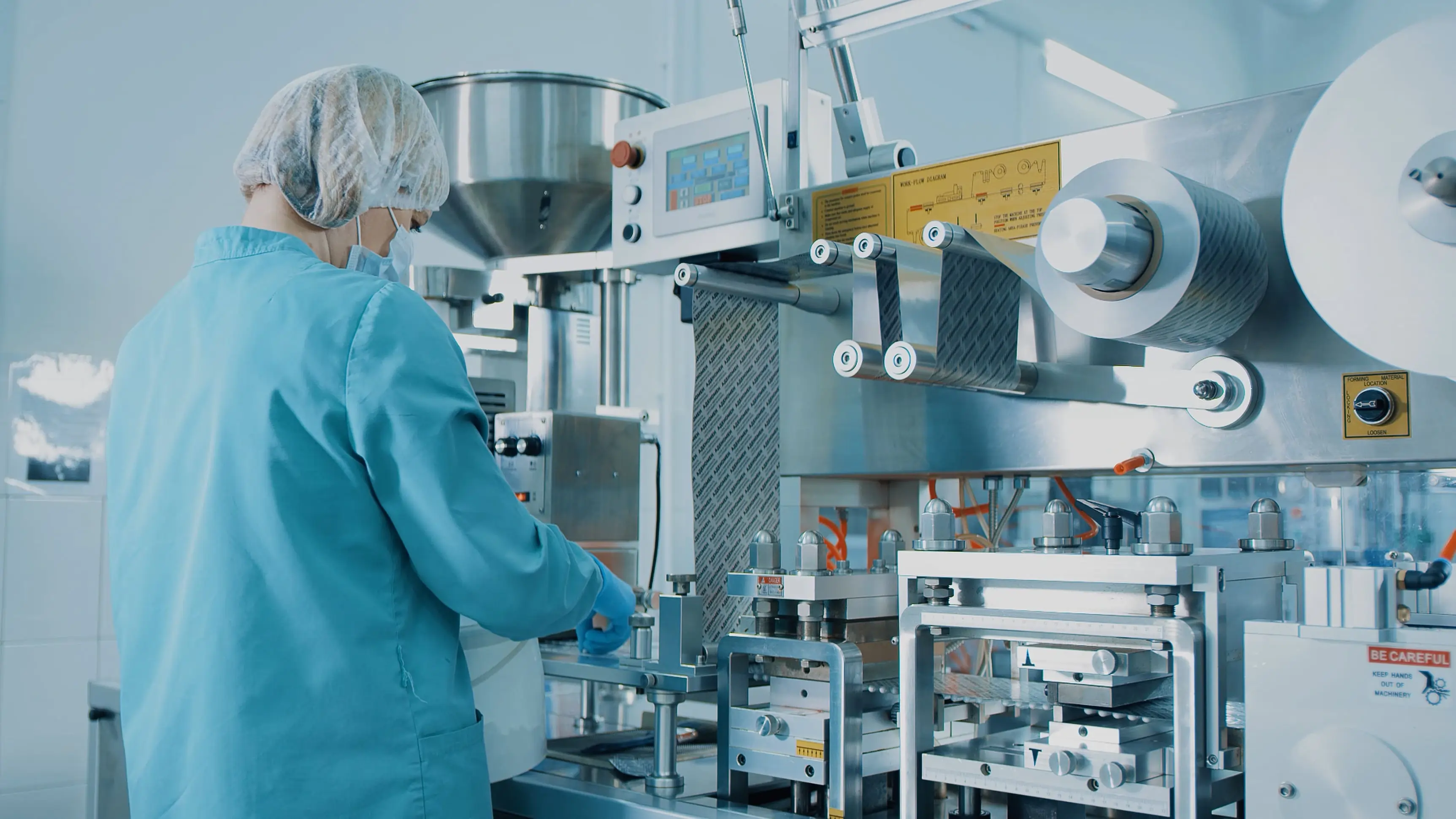
Table of Contents





Recent Posts
Popular posts
Certifications




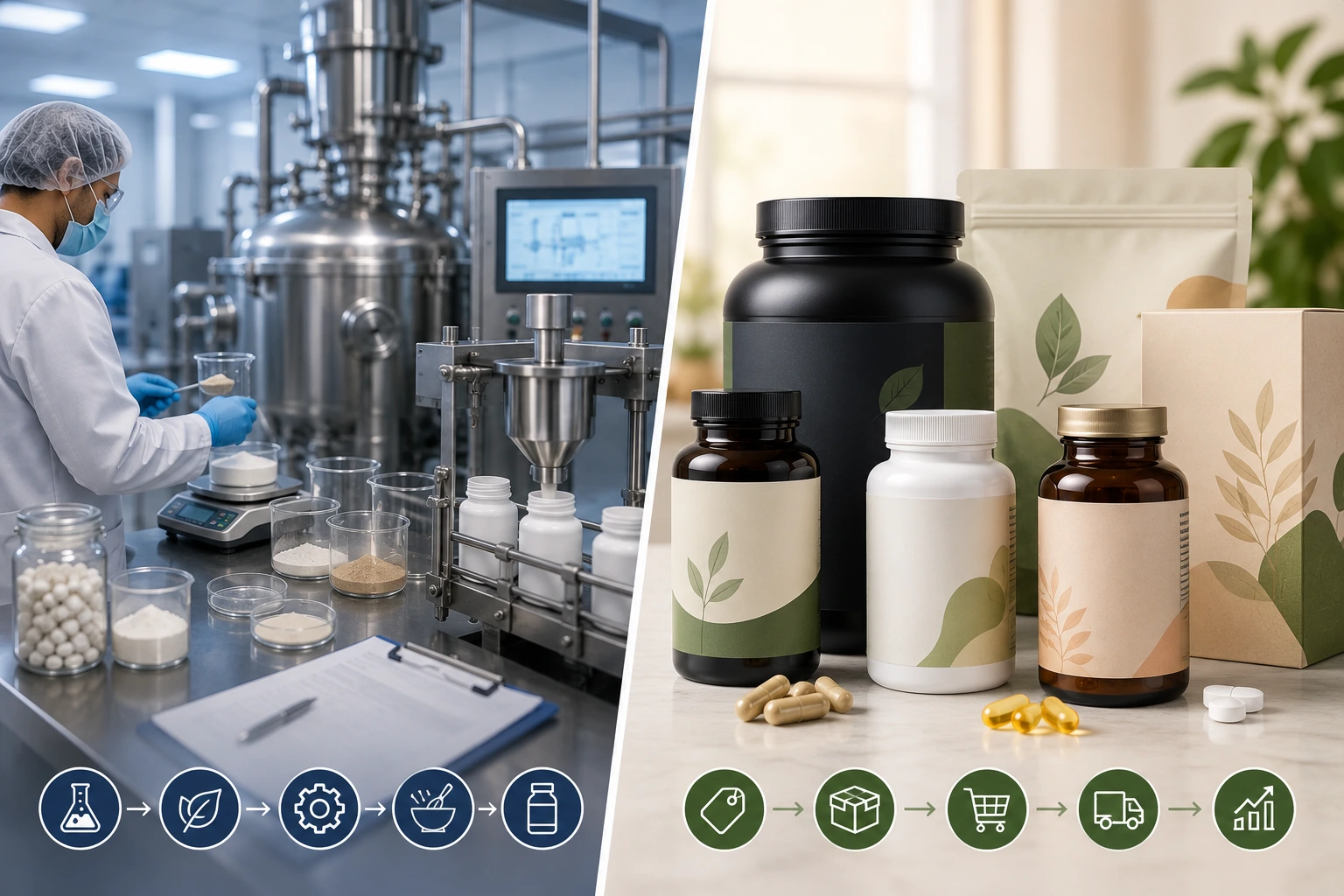
The supplement manufacturing process follows a controlled and documented system. In it, formulation, regulated production, and quality checks move together rather than in isolation. For brands operating in the US and UK markets, every step needs to align with regulatory expectations. At the same time, those steps must support consistency in output and protect consumer safety.
F.A.M.E. Health Labs operates within this structured framework, supporting supplement brands through formulation, manufacturing, testing, and packaging under FDA-registered and cGMP-compliant conditions. Understanding how the process works helps explain why manufacturing standards exist in the first place. It also shows how experienced partners help brands deal with complexity without relying on shortcuts.
Looking for a manufacturing partner rather than a process primer? Start with contract supplement manufacturing at F.A.M.E. — white label from 500 units, custom formulation from 2,500.
The Initial Stage: Research and Formulation
Every supplement starts with early decisions. These influence safety, quality, and regulatory fit. Once set, they tend to guide everything that follows.
Formulation Development
Formulation development decides what the product contains and how it is delivered to the end user. This includes selecting active ingredients, fixing dosage levels, and choosing the delivery format, such as capsules, tablets, powders, liquids, or gummies.
Formulators also study ingredient interactions, stability, and bioavailability. In the US, formulations must align with FDA dietary supplement guidelines. Similar care is taken in the UK. Here, ingredient acceptance and labeling expectations are shaped by Food Standards Agency (FSA) practices.
A well-designed formulation supports consistent manufacturing outcomes. It also lowers the risk of reformulation later in the dietary supplement manufacturing process, when changes become harder to manage.
Ingredient Sourcing and Quarantine
Ingredient sourcing focuses on quality, traceability, and supplier reliability. Raw materials must meet defined specifications for identity, purity, and strength. Only then are they approved for use.
Manufacturers begin by reviewing supplier certificates of analysis, but the process goes deeper under GMP Manufacturing standards. Upon receipt, all materials enter a mandatory quarantine for identity testing. As a result, raw materials perfectly align with their verified specifications. Such rigorous internal scrutiny limits contamination risk while streamlining downstream quality control. From this point on, a detailed audit trail begins to form. It serves as the product's permanent record throughout its manufacturing lifecycle.
The Manufacturing Process: From Ingredients to Tablets or Capsules
Once formulation, sourcing, and identity testing are approved, physical production begins. That’s when the finished dosage is prepared under controlled conditions.
1. Blending and Granulation
A thorough blending stage uniformly distributes ingredients across the entire batch. Potency levels may vary between individual units if mixing is inconsistent. This could lead to immediate compliance risks. Some formulations require granulation. This step improves flow and compressibility for tablet production, with engineers choosing between dry or wet methods based on specific ingredient behavior. Ultimately, meticulous control at this stage secures reliable results across the entire supplement manufacturing process.
2. Compression and Encapsulation
Compression forms blended materials into tablets using calibrated presses. Encapsulation fills powders or granules into hard or soft capsules. Equipment settings, environmental conditions, and in-process checks all influence the final output.
Weight variation, hardness, and fill accuracy are monitored during production. These checks help maintain batch consistency. They also reduce the risk of deviations that could lead to rework or rejection. Manufacturers experienced in custom supplement manufacturing often do not stick to fixed settings. Instead, they adjust parameters based on formulation behavior.
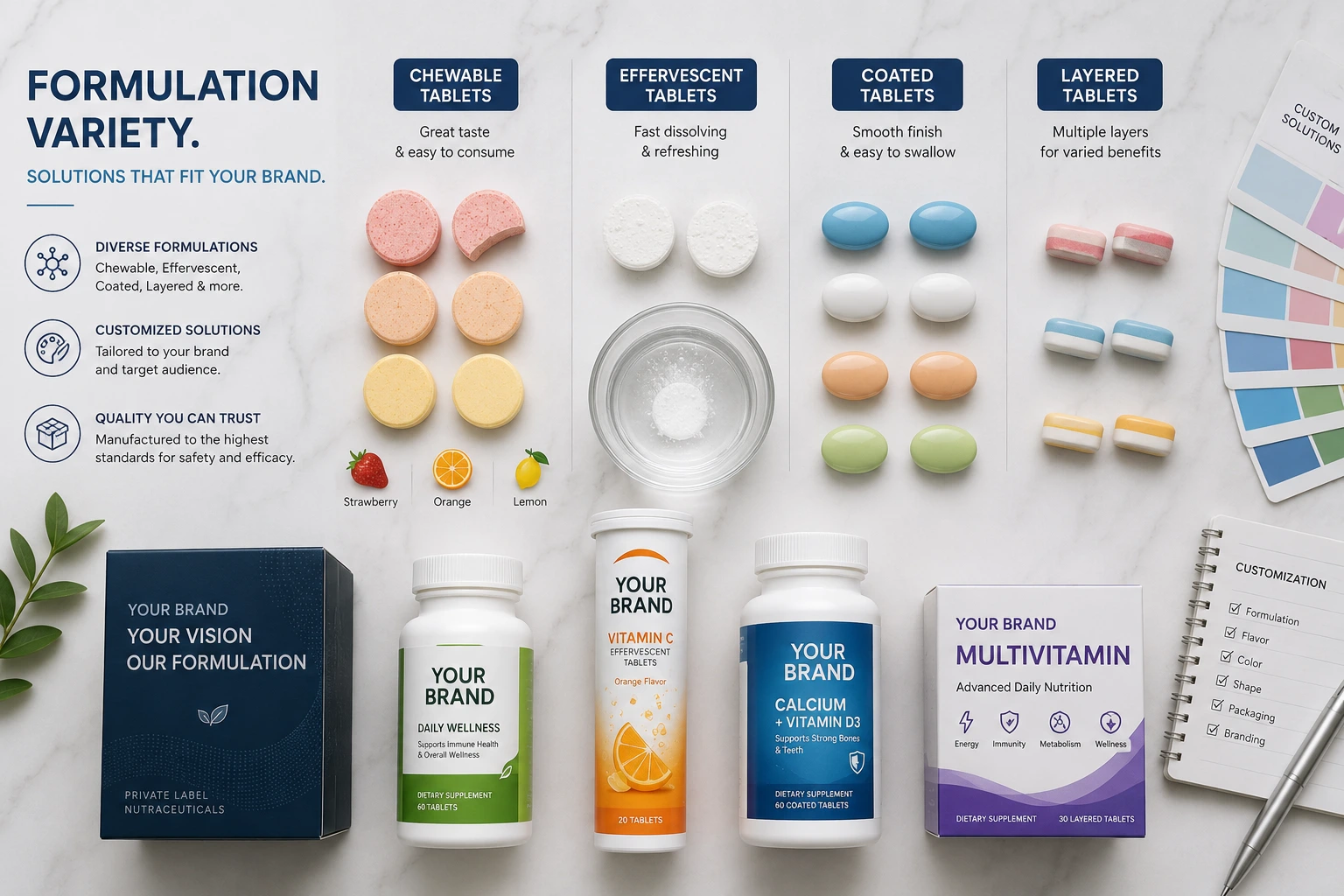
3. Coating and Tablet Film Coating
Coating adds a protective or functional layer to tablets. Film coatings may improve stability, help manage release timing, or make tablets easier to swallow.
This stage in the supplement manufacturing process requires careful control of temperature and humidity. Uneven coating can affect appearance, performance, and shelf stability. Clear documentation helps make sure coating results remain consistent across production runs.
Quality Control and Testing: Ensuring Safety and Effectiveness
Quality control is built into each stage of the supplement manufacturing process instead of being treated as a final step. Testing supports regulatory alignment and gives brands confidence in the finished product.
Testing for Potency and Purity
Potency testing confirms that active ingredients meet labeled amounts. Purity testing checks for contaminants such as heavy metals, microbes (like Salmonella and E. coli), or unwanted substances.
Testing may take place at several points, including raw material intake, in-process checks, and finished product evaluation. Results are reviewed against predefined acceptance criteria before release. This approach supports accountability throughout the supplement manufacturing process.
Stability Testing
Stability testing looks at how a supplement performs over time under defined storage conditions. By using both accelerated and real-time studies, manufacturers can determine shelf life and storage recommendations. Data from stability studies also guide expiration dating and packaging decisions. Products without stability validation risk degrading before they reach consumers.
Stability programs become especially important for complex formulations and moisture-sensitive ingredients within the dietary supplement manufacturing process.
Good Manufacturing Practices (GMP)
Good Manufacturing Practices define how facilities, equipment, personnel, and documentation are managed. In the US, these are specifically mandated under FDA 21 CFR Part 111. They reduce variability and support traceability.
GMP Manufacturing systems cover sanitation, training, recordkeeping, deviation handling, and corrective actions. Manufacturers that invest in strong GMP programs are generally better prepared for audits. They are also more consistent in their output.
Packaging and Labeling: The Final Touches Before Distribution
Packaging and labeling are the final physical steps in the supplement manufacturing process before products move into distribution.
Packaging Materials
Packaging materials are finalized based on how sensitive the product is and how it will be distributed. Common options include bottles, blister packs, sachets, and pouches. Factors such as barrier protection, tamper evidence, and compatibility with the formulation are reviewed during selection. Many supplement manufacturing companies review packaging early to avoid delays in the launch.
Labeling Compliance
Labeling must accurately reflect ingredient content, serving size, and allergen information. In the US, labels follow FDA dietary supplement labeling rules. In the UK, similar attention is given to clarity and permitted health claims under FSA guidelines.
Claims must stay conservative and evidence-aligned. Unsupported statements increase regulatory risk. Label reviews are often handled alongside quality teams to maintain compliance throughout the supplement manufacturing process.
Distribution and Market Launch for Commercial Readiness
After products are packed and released, the supplement manufacturing process enters the logistics stage.
Distribution Channels
Distribution may include direct-to-consumer shipping, retail fulfillment, or third-party logistics partners. Storage conditions, transport handling, and inventory tracking continue to matter after manufacturing ends.
Manufacturers often work closely with logistics teams at this stage. A reliable supplements manufacturer supports distribution readiness through accurate release documentation and batch records.
Marketing and Brand Positioning
Manufacturers do not create marketing claims, but production quality still affects brand positioning. Consistency, transparency, and compliance support long-term trust.
Brands that understand manufacturing realities tend to communicate more carefully. This alignment helps reduce friction between marketing goals and regulatory expectations. Our controlled manufacturing process helps brands maintain credibility in competitive markets.
Closing the Loop from Formulation to Market
The supplement manufacturing process follows a structured system. It is built on formulation science, controlled production, documented quality, and regulatory awareness. Each stage plays a role in protecting product integrity and consumer confidence.
F.A.M.E. Health Labs operates within this framework. We support brands through compliant formulation, controlled manufacturing, and quality-driven release practices. For US and UK brands, working with a partner that understands both process and regulation helps reduce risk. It also helps them achieve scalable growth in the dietary supplement space.
FAQs on Supplement Manufacturing Process
Is GMP required for dietary supplements?
Yes. In the US, dietary supplements must be manufactured in accordance with FDA cGMP regulations (21 CFR Part 111). These standards define how products are produced, tested, and documented.
Why is quality control important in supplement manufacturing?
Quality control helps confirm ingredient identity, potency, and purity. It also supports traceability and reduces the likelihood of recalls or regulatory action.
What are Good Manufacturing Practices (GMP)?
Good Manufacturing Practices are structured systems that govern facility hygiene, equipment use, personnel training, and recordkeeping to support consistent product quality.
What type of packaging is used for dietary supplements?
Common options include bottles, blister packs, sachets, and pouches. Selection depends on formulation sensitivity, shelf life needs, and distribution plans.
How do supplements get from the manufacturer to the market?
After final testing and release, supplements move through distribution channels such as warehouses, retailers, or direct-to-consumer fulfillment systems.
What Do You Need?

Contract Manufacturing
Full-service supplement manufacturing from stock to custom white label, private label, co-manufacturing, and bulk.






Ingredient Sourcing
Global raw material sourcing, proprietary blend development, MOSA Organic, Halal and Kosher flavor systems.

Testing & CRO
ISO/IEC 17025 accredited testing ingredient and finished product. COAs accepted globally by FDA, Health Canada, and EU.


Enterprise Partnership
Full-platform commercial partnership for high-volume brands. Dedicated team, VP-level account management, real-time portal.

Most Viewed Posts