// Blog post
Liposomal Benefits: Why Liposomal Supplements Are Growing in Popularity
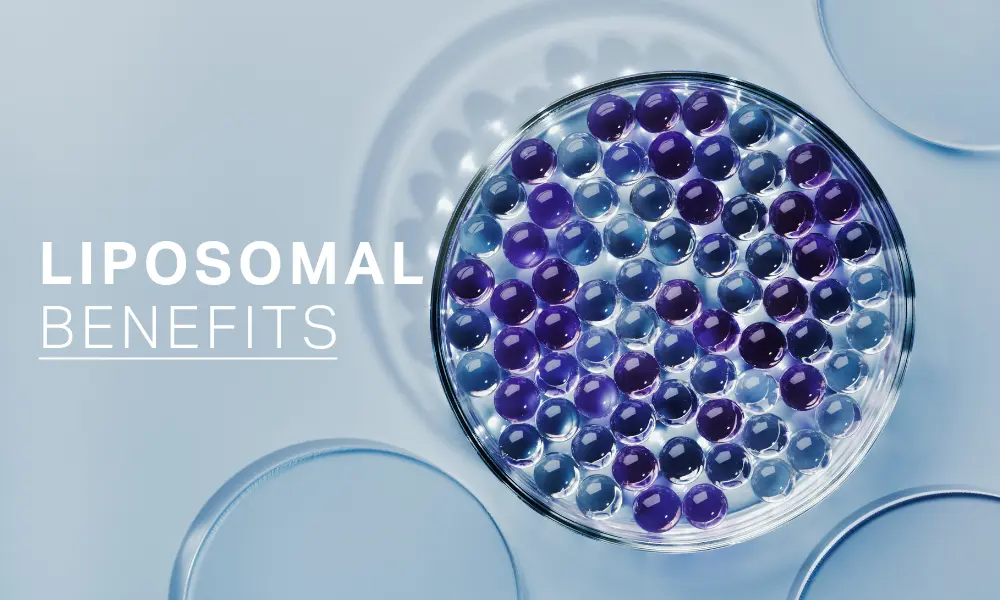
Table of Contents





Recent Posts
Popular posts
Certifications




Liposomal supplements wrap nutrients in tiny lipid bubbles called liposomes. The aim is better absorption: the liposome shields the nutrient during digestion so more of it reaches the bloodstream. For brand owners, liposomal formats offer a way to stand out with higher bioavailability and fewer synthetic additives, which appeals to consumers who want more from each dose.
Key Takeaways
- Liposomal Technology Can Increase Nutrient Absorption: Liposomes are made of phospholipids, the same material as cell membranes. They protect nutrients from breakdown in the gut, which can raise bioavailability compared with standard forms.
- Liposomal Delivery Supports Cleaner, More Efficient Supplementation: Because more of each dose may be absorbed, liposomal products can use smaller doses and fewer fillers. That supports a clean-label position that health-conscious consumers look for.
- Targeted Benefits Across Popular Nutrients Make Liposomal Formats Versatile: From vitamin C for immune support to glutathione for antioxidant support and curcumin for joint comfort, liposomal delivery works with many nutrients. It suits premium brands that want a clear absorption story.
What are Liposomal Supplements?
Liposomal supplements are a newer approach to nutrient delivery. They utilize liposomes, tiny spherical vesicles made from phospholipid molecules, to encapsulate active ingredients such as enzymes. This structure mimics the body's cell membranes, allowing for more efficient absorption of nutrients. Traditional supplements can be broken down in the digestive system before they reach the bloodstream. Liposomes protect the active ingredients along the way, which can improve bioavailability. This absorption advantage is why liposomal supplements are growing in popularity.
How Do Liposomal Supplements Work?
Liposomal supplements capitalize on the body's natural processes to enhance nutrient delivery. Liposomes, which are akin to the body's cell membranes, act as carriers for the encapsulated nutrients. When consumed, these liposomes are not as easily broken down by the digestive system as traditional delivery methods. Instead, they can fuse with cell membranes and release their contents, so more of the vitamins and compounds inside may be absorbed. Liposomes are one type of microencapsulation technology, a group of methods that protect sensitive ingredients until they are released. This is the main reason liposomal vitamins are marketed on absorption.
Explore the Different Benefits of Liposomal Supplements
Enhanced Absorption & Bioavailability
Liposomal supplements can boost nutrient absorption and bioavailability by mimicking cell membranes. More of the nutrient can reach the bloodstream, which is the core advantage of liposomal supplements over traditional forms.
Fewer Synthetic Additives
Liposomal supplements reduce the need for artificial additives by using natural phospholipids to encase nutrients. This supports a cleaner label with fewer synthetic compounds, which many consumers now look for.
Smaller nutrient doses deliver effective results
Because absorption is higher, a smaller liposomal dose can do the work of a larger standard dose. Lower doses can also make the product easier to tolerate, one of the main liposomal supplements benefits compared to traditional options.
Improved Nutrient Delivery to Target Cells
Because the liposome can fuse with cell membranes, it can release nutrients such as vitamins directly into cells. This targeted delivery is a key part of the benefits of liposomal supplements over other methods.
Common Liposomal Supplements and Their Specific Benefits
Liposomal Vitamin C Benefits
Liposomal vitamin C is valued for its absorption and antioxidant properties, which support immune function and collagen production. The liposomal form can raise bioavailability, so the body can use more of each dose. It suits products built around immune support, antioxidant protection and skin health. The trade-offs are a higher cost than regular vitamin C and fewer suppliers.
Liposomal Glutathione Benefits
Liposomal glutathione offers improved bioavailability, which helps more of this antioxidant reach the cells. Glutathione is easily broken down in the gut, so the encapsulated form helps protect it. It supports liver health, normal immune function and the body's defense against free radicals. The trade-offs are a higher cost and fewer suppliers than standard forms.
Liposomal Curcumin & Joint Support
Curcumin on its own is poorly absorbed. A liposomal form improves its bioavailability, which makes it a stronger fit for products that support joint comfort, antioxidant protection and healthy aging. The trade-offs are a higher price and possible sourcing issues.
Liposomal CBD: A Regulatory Note
Liposomal CBD products are widely sold, but brands should know the rules first. The FDA has concluded that CBD products are excluded from the dietary supplement definition, because CBD is the active ingredient in an approved drug (FDA). CBD cannot be marketed as a dietary supplement, so get regulatory advice before planning a CBD product.
Final Thoughts
Liposomal supplements protect nutrients during digestion so more of each dose can be absorbed. Vitamin C for immune support, glutathione for antioxidant support and curcumin for joint comfort are the most common examples. They cost more than traditional forms, so the absorption story has to be clear on the label and in marketing. For brands planning a liposomal line, the first step is a conversation with an experienced dietary supplement manufacturer.
F.A.M.E. Health Labs manufactures supplements for brands at our FDA-registered, cGMP facility in Cedartown, Georgia. Our R&D team works on advanced delivery formats, including liposomal encapsulation, and CURI, our ISO 17025 sister lab on the same campus, handles testing and stability. Choose from 400+ stock formulas from 1,000 units, or develop a custom formula from 2,500 units. Contact F.A.M.E. Health Labs to get started.
FAQs
Why are liposomal supplements better absorbed than traditional supplements?
The liposome shell is made of phospholipids, like cell membranes. It protects the nutrient during digestion, so more of it can reach the bloodstream and be used by the body.
Is liposomal technology suitable for both water-soluble & fat-soluble nutrients?
Yes, liposomal technology is suitable for both water-soluble and fat-soluble nutrients. Water-soluble nutrients sit in the liposome's watery core, and fat-soluble nutrients sit in its lipid layer, so one delivery system can carry a wide range of nutrients.
How does liposomal delivery affect the shelf life of supplements?
Liposomal delivery can enhance the shelf life of supplements by protecting sensitive nutrients from oxidation and degradation. Shelf life still depends on the formula and packaging, so stability testing is needed for each product.
// Our Services
What Do You Need?
Select the service that matches your need. Each card expands to show what's included, minimum orders, and certifications then routes you directly to the right section of the form below.

F.A.M.E. Health Labs
Contract Manufacturing
Full-service supplement manufacturing from stock to custom white label, private label, co-manufacturing, and bulk.
See Services






F.A.M.E. Ingredients
Ingredient Sourcing
Global raw material sourcing, proprietary blend development, MOSA Organic, Halal and Kosher flavor systems.
See Services

Curí Inc.
Testing & CRO
ISO/IEC 17025 accredited testing ingredient and finished product. COAs accepted globally by FDA, Health Canada, and EU.
See Services

F.A.M.E. Complete
Enterprise Partnership
Full-platform commercial partnership for high-volume brands. Dedicated team, VP-level account management, real-time portal.
See Services