// Blog post
A Guide to Choosing the Right Capsule Manufacturing Company
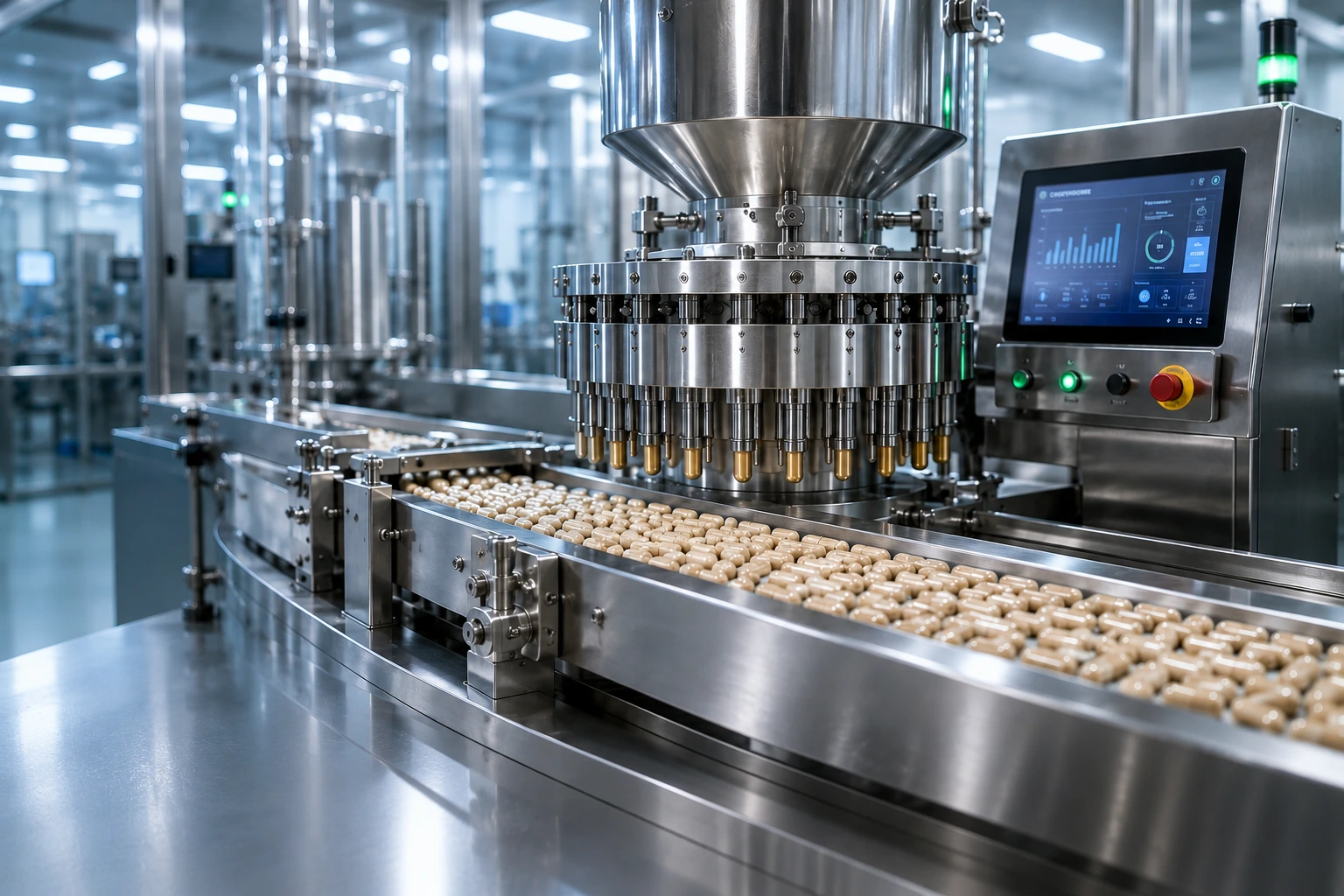
Table of Contents





Recent Posts
Popular posts
Certifications






Capsules are becoming popular in supplements. Many brands choose them because they give exact doses, protect the ingredients inside, and are easy for people to take. As more people want capsule products, more manufacturers enter the market. But not all of them follow the same quality standards or have strong systems in place for long-term production.
Choosing the right partner affects product quality, regulatory alignment, and brand reputation. A manufacturing mistake can lead to delays, compliance risk, or customer dissatisfaction. A structured evaluation process helps you reduce risk and select a partner that supports sustainable growth.
Importance of Picking the Right Capsule Manufacturing Company
The manufacturer you choose influences more than production output. It affects compliance strength, operational reliability, scalability, and long-term brand stability. A structured partnership reduces risk and supports sustainable commercial growth.
1. Protects Regulatory Standing
A compliant manufacturer operates under current cGMP standards and maintains complete, audit-ready documentation. Structured release procedures and verified testing protocols reduce risk regarding warning letters, product holds, or recalls. Strong compliance protects both brand credibility and distribution partnerships.
2. Ensures Product Consistency
Capsule weight accuracy, ingredient uniformity, and capsule integrity depend on validated processes and calibrated equipment. Reliable manufacturers maintain strict in-process controls and trained technical teams. Consistent batches build customer trust and reduce complaints and product returns.
3. Supports Scalability
As demand grows, production should increase without lowering quality. Manufacturers that have multiple capsule machines, enough trained staff, and clear capacity planning can increase output smoothly. This becomes especially important when launching new SKUs or expanding into more markets.
4. Reduces Operational Risk
Manufacturers that work with multiple suppliers and follow clear sourcing controls are better able to handle raw material shortages or shipping delays. Having backup suppliers and proper risk planning helps keep production running and inventory stable.
5. Protects Brand Reputation
Poor quality, delays or missing paperwork can hurt a brand’s reputation fast. A reliable, disciplined manufacturing partner lowers these risks and supports long-term brand credibility.
6. Improves Speed to Market
Structured production planning, validated processes, and clear communication shorten development timelines. Manufacturers that manage pilot runs and full-scale production efficiently help brands launch on schedule and respond quickly to market opportunities.
7. Strengthens Cost Predictability
Transparent pricing models, stable lead times, and reduced rework contribute to predictable production costs. Strong operational planning minimizes emergency freight and rush production expenses, helping brands maintain margin stability.
Tips to Choose the Right Capsule Manufacturer
One must carefully assess various factors before opting for a capsule manufacturer. Look at their systems and processes. Do not get swayed by marketing promises.
1. Evaluate Regulatory Compliance and Certifications
Regulatory compliance is the foundation of capsule manufacturing. Confirm that the facility operates under current cGMP standards and maintains documented procedures across production, testing, and release. Ask about recent FDA inspections and request clarity on inspection outcomes. A reliable manufacturer should openly discuss audit findings and corrective actions.
Since the FDA inspects but does not formally certify facilities, verify third-party cGMP certifications such as NSF or NSF Certified for Sport, if relevant to your market. Additional certifications like Halal, Kosher, Organic, or FSSC 22000 may support brand positioning. Confirm how often audits occur and how documentation is maintained. Strong compliance systems reduce regulatory exposure, protect distribution partnerships, and ensure long-term operational stability.
2. Assess Manufacturing Capabilities
Manufacturing capability directly affects product consistency and scalability. Evaluate encapsulation equipment, blending systems, and facility infrastructure. Confirm whether the manufacturer supports standard gelatin as well as vegetarian formats like HPMC or Pullulan capsules. Ask about fill weight accuracy controls and capsule inspection systems.
Understand production capacity. See how quickly output can increase during demand spikes. Analyze minimum order quantities and typical production timelines. A capable partner should manage pilot batches, validation runs, and full-scale production efficiently. Facility size, staffing levels, and automation influence turnaround time. Strong manufacturing systems reduce bottlenecks and support growth without lowering quality standards.
3. Quality Assurance and Testing Protocols
Under FDA 21 CFR Part 111, raw materials must undergo strict identity testing. Confirm that your partner also performs potency verification and contaminant screening before production to maintain full compliance. Ask for sample Certificates of Analysis to evaluate documentation detail and transparency.
Finished capsules should be tested for weight variation, uniformity, microbiological safety, and heavy metal limits. Clarify how deviations are handled and how non-conforming batches are documented. If your product claims an expiration date, stability testing procedures must be reviewed to confirm shelf-life validation. Strong QA systems reduce recall risk and protect brand credibility. Testing discipline demonstrates that the manufacturer prioritizes measurable quality standards over production speed.
4. Ingredient Sourcing Standards
Ingredient sourcing influences both quality and supply stability. Confirm that suppliers are qualified through documented approval processes. Ask how vendors are audited. Question how ingredient specifications are verified before acceptance. A structured supplier qualification program should include identity testing and contamination screening.
Request clarity on whether multiple suppliers are approved for critical ingredients. Diversified sourcing reduces exposure to delays or geopolitical disruptions. Confirm that lot-level traceability is maintained for every raw material used. Strong sourcing standards protect against adulteration risks and inconsistent potency. Reliable sourcing systems contribute to predictable production timelines and long-term operational resilience.
5. Formulation Expertise
Formulation expertise reduces costly development errors. Some ingredients need specific particle sizes, flow characteristics or encapsulation adjustments to fill and perform correctly. A partner with in-house formulation support helps review ingredient compatibility, dosage feasibility, and stability. At F.A.M.E. Health Labs, our technical staff checks each of these before production begins.
Ask whether technical staff can assist with reformulation if challenges arise. Stability projections, excipient selection, and capsule type recommendations should be part of the discussion. Early formulation review helps prevent fill weight inconsistencies or ingredient degradation. A capable partner shortens development timelines, so you can launch sooner.
6. Communication and Customer Support
Operational transparency depends on structured communication. Confirm whether you will work with a dedicated account manager familiar with your product specifications. Ask how production updates, testing results, and shipping timelines are communicated.
Reliable manufacturers share clear documents and reply quickly to questions. There should also be backup contacts if your main point of contact is unavailable. Easy access to shipment tracking and order updates helps you plan better.
Clear communication lowers the risk of production mistakes, supports better inventory planning, and helps avoid delays. A responsive partner makes it easier for your internal team and the manufacturing team to stay aligned.
7. Reputation and Client Reviews
Reputation provides insight into operational reliability. Review testimonials and case studies with a critical lens. Look for consistent feedback regarding quality, responsiveness, and delivery performance. Avoid relying only on highly polished reviews.
Check the manufacturer’s FDA inspection history and any public warning letters, if available. Speak with industry contacts to get honest, independent feedback. Ask how long they have worked with their existing clients.
When companies work together for many years, it usually means the manufacturer runs things properly and stays financially stable. Reputation is not just marketing. It shows whether the manufacturer regularly follows regulations, maintains quality, and delivers products on time.
Checklist to Choose a Capsule Supplement Manufacturer
Before finalizing your decision, confirm the following:
- Verified cGMP compliance and recent inspection history.
- Transparent testing standards and COA availability.
- Capacity to scale production when demand increases.
- Documented ingredient sourcing controls.
- Clear pricing structure and MOQ clarity.
- Reliable communication processes.
- Strong industry reputation and financial stability.
Review lead times, packaging capabilities, and automation compatibility. Confirm whether the facility supports pilot batches as well as full-scale production. A structured checklist reduces decision risk and keeps both teams aligned over the long term.
Our Commitment to Manufacturing Excellence
Choosing the right capsule manufacturing partner requires more than comparing pricing or minimum order quantities. It demands careful evaluation of compliance systems, quality controls, scalability, sourcing discipline, and operational transparency. Each decision directly affects product integrity and long-term brand performance.
A structured review process helps. Identify manufacturers that prioritize documentation, testing standards, and clear communication. When aligned correctly, a capsule contract manufacturer becomes your business's operational extension.
At F.A.M.E. Health Labs, we manufacture capsules in-house at our FDA-registered, cGMP facility in Cedartown, Georgia, with NSF and SQF certifications. CURI, our ISO 17025 sister lab on the same campus, handles testing and stability studies. Stock formulas start at 500 units and custom formulas at 2,500 units. That structure gives brands consistent quality and reliable launches, and over time it builds brand stability.
Frequently Asked Questions (FAQs)
Q.1. What is a capsule manufacturing company?
A capsule manufacturing company produces dietary supplements in encapsulated form. It manages raw material sourcing, formulation support, encapsulation, quality testing, packaging, and final product release under regulated manufacturing standards.
Q.2. What certifications should a capsule manufacturing company have?
A capsule manufacturing company should operate under cGMP standards and maintain documentation readiness for FDA inspection. Third-party certifications such as NSF, Halal, Kosher, or Organic may also strengthen compliance and brand credibility.
Q.3. What is the typical MOQ for capsule manufacturing?
Minimum order quantities vary by manufacturer and production capacity. Some facilities offer lower MOQs with higher per-unit costs, while larger runs bring better pricing and scalability. At F.A.M.E. Health Labs, stock formulas start at 500 units and custom formulas at 2,500 units.
Q.4. Can capsule manufacturing companies provide private label services?
Yes, many partners offer private-label services using ready-made formulations for quick market entry. This differs from custom capsule manufacturing, where the manufacturer develops a unique formula from scratch. Both paths can include custom branding, packaging support and labeling services. Services vary depending on the manufacturer’s capabilities and production structure.
Q.5. Why is third-party testing important in capsule manufacturing?
Third-party testing verifies product quality, potency, and safety. It provides independent confirmation that specifications are met. This reduces compliance risk and strengthens trust with distributors, retailers, and consumers.
Q.6. Can a capsule manufacturer help with formulation?
Many capsule manufacturers provide formulation support. This includes ingredient compatibility review, dosage validation, and stability guidance. In-house formulation expertise helps reduce development errors and accelerates time to market.
// Our Services
What Do You Need?
Select the service that matches your need. Each card expands to show what's included, minimum orders, and certifications then routes you directly to the right section of the form below.

F.A.M.E. Health Labs
Contract Manufacturing
Full-service supplement manufacturing from stock to custom white label, private label, co-manufacturing, and bulk.
See Services






F.A.M.E. Ingredients
Ingredient Sourcing
Global raw material sourcing, proprietary blend development, MOSA Organic, Halal and Kosher flavor systems.
See Services

Curí Inc.
Testing & CRO
ISO/IEC 17025 accredited testing ingredient and finished product. COAs accepted globally by FDA, Health Canada, and EU.
See Services


F.A.M.E. Complete
Enterprise Partnership
Full-platform commercial partnership for high-volume brands. Dedicated team, VP-level account management, real-time portal.
See Services