// Blog post
Soft Gelatin Capsules vs Hard Gelatin Capsules: Differences and Benefits
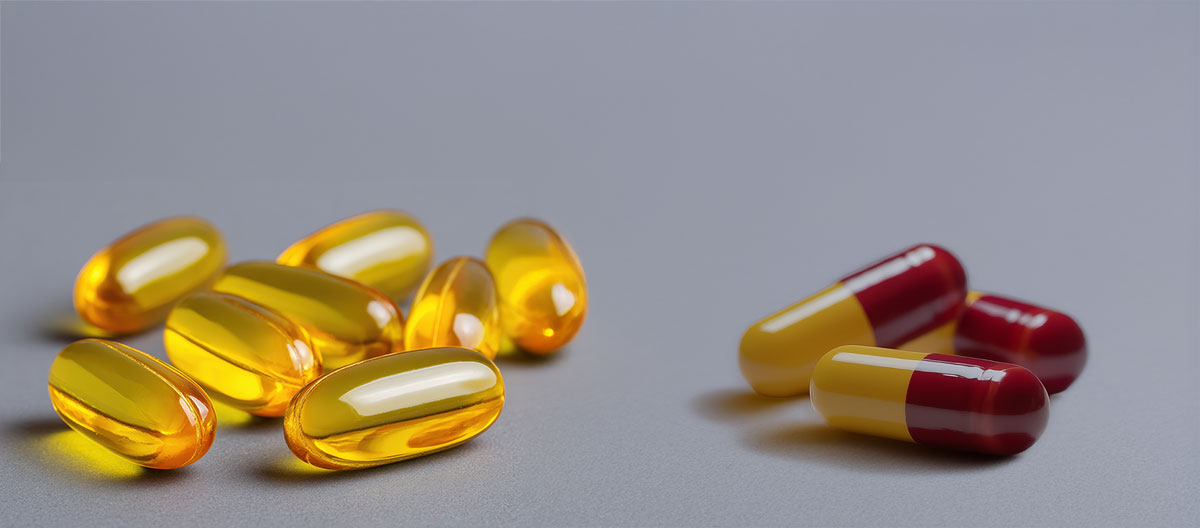
Table of Contents






Recent Posts
Popular posts
Certifications




When deciding between hard gelatin capsules and soft gelatin capsules, understanding their differences is essential to making an informed choice. These two types of capsules are distinguished primarily by their composition and application. Hard gelatin capsules are typically used for powdered substances due to their two-piece shell, while soft gelatin capsules are ideal for encapsulating oils and other liquid substances due to their one-piece structure. Analyzing the benefits of each can help you choose the most suitable option for your product formulation needs.
Key Takeaways
- Structure Difference: Soft gelatin capsules are one-piece, flexible shells ideal for liquids, while hard gelatin capsules are two-piece rigid shells suited for powders and granules.
- Formulation Fit: Softgels work best for oil-based and fat-soluble formulations; hard gelatin capsules are preferred for dry, powdered, and moisture-sensitive ingredients.
- Manufacturing Complexity: Softgels require specialized equipment and higher production costs, whereas hard gelatin capsules offer a simpler, more cost-efficient manufacturing process.
What Are Soft Gelatin Capsules?
Soft gelatin capsules, also known as softgels, are predominantly used in the pharmaceutical and nutraceutical industries for their versatility and consumer friendliness. Their one-piece shell holds liquids, oils, and semi-solids, which can improve the bioavailability of the active ingredients. This attribute is particularly beneficial for delivering fat-soluble vitamins, fish oils, and other nutraceutical products, ensuring efficient nutrient absorption.
Uses and Applications
Beyond liquid formulations, softgels are also preferred in cases where an immediate bioavailability is desired. The smooth texture makes the capsule easy to swallow, enhancing consumer compliance. Additionally, these capsules provide an excellent barrier against oxidation, making them ideal for substances that are sensitive to light and air.
What Are Hard Gelatin Capsules?
Hard gelatin capsules are the go-to choice for encapsulating powdered or granulated ingredients. Widely used in both pharmaceutical and nutraceutical applications, they consist of two rigid sections, a cap and a body, that fit snugly together to form a contained unit. This design makes them extremely suitable for delivering precise doses of dry or powdered formulations and immediate-release products.
Uses and Applications
Due to their versatility, hard gelatin capsules can also be utilized for pharmaceutical compounding, encapsulating herbal supplements, and creating specialized dosage forms. They are a preferred option when formulating with active ingredients that require protection from degradation, as the capsules offer effective moisture protection. Their ease of use, alongside customizable sizes and colors, also makes them an attractive choice for capsule manufacturers aiming to create distinctive products.
Key Differences Between Soft and Hard Gelatin Capsules
Understanding the differences between soft and hard gelatin capsules involves examining their composition, structure, and applications. The primary distinction lies in their physical form. Soft gelatin capsules, or softgels, are single-piece containers ideal for holding liquids, oils, and semi-solids. They are manufactured from a gelatin formula that makes the shell flexible and smooth, with no visible join.
Conversely, hard gelatin capsules are constructed from two distinct halves, which come together to encase powdered or granulated substances. They use a different formulation of gelatin that gives them a sturdy and rigid structure. This makes them perfect for housing dry ingredients and providing a controlled release.
Customization capabilities also vary between the two. While both offer opportunities for color and size variation, soft gelatin capsules allow for custom shapes and opacity levels, catering to specific branding needs. Hard gelatin capsules, on the other hand, offer more straightforward color and imprint customization to differentiate products on a basic level.
When considering manufacturing complexity, soft gelatin capsules typically require more specialized equipment and expertise due to their intricate production process, thus impacting cost-efficiency. In contrast, hard gelatin capsules have a simpler manufacturing process, which can be more cost-effective, especially for bulk production.
Benefits of Soft Gelatin Capsules
Enhanced Bioavailability
One of the standout benefits of soft gelatin capsules is their ability to enhance the bioavailability of the encapsulated ingredients. This is because the liquid fill and one-piece shell dissolve quickly in the gastrointestinal tract. When liquid or semi-solid formulations are encased in a softgel, they are already dissolved in a medium, allowing for more immediate absorption by the body.
Soft gelatin capsules enhance the bioavailability of fat-soluble vitamins and poorly water-soluble compounds by using a unique matrix that facilitates nutrient absorption, offering consistent nutritional benefits. This improved delivery system makes softgels a preferred choice for consumers and softgel manufacturers aiming for effective products.
Ideal for Liquid Formulations
Soft gelatin capsules are particularly well-suited for liquid formulations, offering a versatile solution for encapsulating all kinds of liquid and semi-solid substances. Their sealed shell holds oils, emulsions, suspensions, and other liquid ingredients without leaking.
The ability to hold liquids makes softgels the preferred choice for delivering oils like fish oil and omega-3s, medium-chain triglycerides (MCTs), and fat-soluble vitamins A, D, E, and K. Beyond nutrients, the softgel form enables unique pharmaceutical applications such as controlled-release and targeted drug delivery.
Moreover, for consumers, the smooth surface of soft gelatin capsules facilitates easy swallowing, enhancing user compliance and satisfaction. Manufacturers also appreciate softgels for their aesthetic versatility, as they can be produced in various colors and opacities, making them a standout choice for branding needs.
Consumer Preference
Soft gelatin capsules often top consumer preference lists mostly due to their user-friendly characteristics. Their smooth, flexible exterior makes them easy to swallow, which is particularly beneficial for individuals who have difficulty with large or chalky tablets. Additionally, the absence of any unpleasant taste or odor during consumption enhances their appeal.
Another factor in consumer preference is the way softgels mask the sensation of taking medication or supplements, making the experience more pleasant. They are also visually appealing, often resembling small, colorful beads that are less intimidating than other dosage forms. This combination of aesthetics and ease of consumption makes soft gelatin capsules a favored choice among increasingly health-conscious consumers who value both efficacy and enjoyment in their wellness routines.
Benefits of Hard Gelatin Capsules
Stability for Dry Ingredients
Hard gelatin capsules are renowned for their stability, particularly for housing dry ingredients. The rigid shell of gelatin and water shields the contents from the outside environment. This design makes them excellent at preserving the integrity and potency of powdered substances, offering minimal interaction with moisture and air.
By protecting sensitive ingredients from degradation, they keep pharmaceuticals and nutraceuticals at full quality and efficacy for longer. As each capsule contains a precise dose, this enhances consistency in dosage delivery, which is critical for supplements. This characteristic, combined with their capacity to hold complex ingredient mixes, makes hard gelatin capsules a stable and reliable choice for dry formulations.
Cost Efficiency
Hard gelatin capsules offer significant cost efficiency, primarily due to their straightforward production process. Their two-piece structure simplifies manufacturing and allows for high-volume, low-cost production, making them an economical choice for both developers and manufacturers. This reduced complexity translates into lower material and labor costs, which is especially beneficial for bulk orders.
Moreover, the simpler manufacturing requirements mean that setup costs for production are generally lower compared to those for softgel facilities. This efficiency does not compromise quality, however, as hard gelatin capsules still maintain excellent stability and functionality for dry ingredients. Their affordability, combined with reliability, makes them an attractive option for companies looking to manage costs without sacrificing product efficacy.
Customizable Formulations
Hard gelatin capsules excel in offering customizable formulations, providing manufacturers with a flexible canvas for product development. Their two-piece design not only facilitates easy filling with a wide range of powder, granule, or pellet forms but also accommodates complex layering of ingredients, enabling controlled release mechanisms.
Manufacturers can further tailor the aesthetic aspects of hard gelatin capsules, choosing from various sizes, colors, and printing options to align with brand identity and product differentiation in the marketplace. This adaptability extends to functional enhancements, such as incorporating enteric coatings for targeted release in the gastrointestinal tract or blend-specific shell modifications for improved ingredient compatibility.
Manufacturing Process of Soft and Hard Gelatin Capsules
Hard Gelatin Capsule Manufacturing
The manufacturing process for hard gelatin capsules involves several key stages, each designed to ensure high quality and consistency. It begins with preparing the gelatin solution, which is comprised of gelatin, water, and sometimes colorants or opacifiers to meet specific visual requirements. Stainless steel pins are then dipped into this solution to form the capsule halves.
Once formed, the capsule halves undergo a drying process that removes excess moisture, ensuring they achieve the desired rigidity and stability. After drying, the halves are precisely trimmed and joined to create empty capsules that are ready for filling. This flexible manufacturing method enables continuous processing, allowing manufacturers to meet high demand efficiently.
Quality control runs through every stage of manufacturing, with checks on capsule dimensions, moisture content, and mechanical strength. Automated systems ensure that these criteria are met before the capsules are filled with their intended contents, be it pharmaceutical drugs or nutraceutical powders. This attention to detail guarantees that each hard gelatin capsule is durable and reliable, ready to deliver its dose effectively.
Soft Gelatin Capsule Manufacturing
Manufacturing soft gelatin capsules takes several controlled steps to produce a sealed shell that can hold liquids. The procedure begins with creating a gelatin mass, which includes gelatin, a plasticizer such as glycerin or sorbitol, water, and possibly flavoring agents or coloring to enhance appeal.
This gelatin mass is then fed into a rotary die machine, which forms, fills, and seals the softgels in one step. In this step, two ribbons of gelatin are formed, which act as the outer shells of the capsules. These ribbons are brought together between rotary dies that form the capsules’ shapes. As these ribbons converge, a precise amount of the liquid or semi-solid fill material is injected, and the capsules are sealed.
After forming, soft gelatin capsules are cooled and dried in tumble dryers, which firms the shells and stops them sticking together. To ensure quality assurance, the capsules undergo rigorous inspection for uniformity in size and fill consistency, as well as visual checks for defects.
Manufacturing soft gelatin capsules demands high-level expertise and advanced technology, which results in a product that effectively encapsulates and preserves liquid formulations, offering improved bioavailability and stability.
Which Type of Gelatin Capsule is Best for Your Product?
For Oil-Based Formulations
For oil-based formulations, soft gelatin capsules are the usual choice because their sealed shell holds liquid ingredients. Softgels can effectively encapsulate and protect oils, such as fish oil, omega-3 fatty acids, and essential oil blends, preventing oxidation and degradation. Their unique formulation allows for the encapsulation of hydrophobic compounds, ensuring that the active ingredients are preserved and delivered efficiently to the consumer.
For Powdered Supplements
For powdered supplements, hard gelatin capsules offer the most effective solution due to their ability to securely house dry ingredients. These capsules have a two-piece design that allows them to be easily filled with uniform doses of powders, granules, or pellets, making them ideal for a variety of supplements, such as herbal extracts, amino acids, and vitamins.
The rigid and protective nature of hard gelatin capsules shields the ingredients from environmental factors like moisture and light, ensuring the potency and stability of the contents over time. Additionally, this type of capsule can be engineered for various release rates, whether immediate or controlled, depending on the product's purpose and desired effect.
Shelf Life
When considering shelf life, hard gelatin capsules typically offer a longer duration compared to their soft counterparts. Hard gelatin capsules keep out moisture and oxygen, which lowers the risk of the dry ingredients inside degrading. This durability extends their shelf life, making them a reliable choice for long-term storage of powdered supplements and medications.
On the other hand, while soft gelatin capsules are excellent for protecting liquid-based ingredients and preventing oxidation of oils, they have a relatively shorter shelf life due to their composition, which can be more susceptible to changes in environmental conditions. Hence, they require careful storage conditions, such as avoiding exposure to high temperatures and humidity.
Cost Considerations
When evaluating cost considerations between the two capsule types, hard gelatin capsules generally emerge as the more budget-friendly option. Their simple manufacturing process, which includes fewer steps and requirements compared to softgels, results in lower production costs. This economical advantage is ideal for companies aiming to produce large volumes of products without incurring significant expenses.
Soft gelatin capsules, while more costly due to the complex machinery and specialized expertise needed for their production, offer unique advantages that justify their higher price point. They hold liquids well and can improve bioavailability, which matters most for formulations that need both.
Ultimately, the choice between hard and soft gelatin capsules will depend on the specific needs of the product, including formulation type, desired properties, and target audience. Balancing these factors with your budget will help determine the most cost-effective solution for your manufacturing goals.
F.A.M.E. Health Labs Is Here to Help You
At F.A.M.E. Health Labs, we understand what supplement brands need from a capsule. We manufacture capsules in-house and produce softgels through a specialist partner, so we can recommend the right format for your formulation. If you're considering a softgel for oil-based nutrients, we manage the project with our partner from formulation to finished product.
We work to cGMP standards, with strict checks on safety and quality. Our team of experienced professionals is dedicated to innovation, helping you explore Custom Formulations that meet your specific needs and market demands.
Our team brings technical expertise and hands-on support from development through to finished, packaged product. Let us assist you in bringing your health and wellness vision to life.
Final Thoughts
In the debate of hard gelatin vs soft gelatin capsules, your choice largely depends on the specific requirements of your product and target audience. Soft gelatin capsules stand out for their capacity to enhance bioavailability and accommodate oil-based formulations, offering a high level of consumer appeal due to their ease of swallowing and attractive appearance. They are a good fit for nutrients where absorption matters most.
Remember, the ideal capsule form takes into account the nature of your formulation, desired outcomes, and consumer preferences. Aligning these elements effectively can make all the difference in competing favorably in the wellness industry. Let us partner with you in this endeavor to deliver innovative health solutions that meet and exceed market expectations.
FAQs
What is the difference between hard and soft gelatin capsules?
Hard gelatin capsules are composed of two rigid halves ideal for dry, powdered ingredients, while soft gelatin capsules have a one-piece, flexible shell designed for liquid or oil-based formulations.
What are the advantages of hard gelatin capsules?
Hard gelatin capsules offer advantages such as stability for dry ingredients, cost efficiency, and the ability to customize formulations, making them ideal for powdered supplements and immediate-release applications.
Do hard gelatin capsules have a longer shelf life than soft gelatin capsules?
Yes, hard gelatin capsules generally have a longer shelf life due to their better protection against moisture and environmental factors, making them ideal for storing dry and powdered ingredients.
Which type of capsule is better for consumer preference?
Soft gelatin capsules are often preferred by consumers due to their ease of swallowing and pleasant texture, especially for liquid formulations, enhancing the overall user experience.
// Our Services
What Do You Need?
Select the service that matches your need. Each card expands to show what's included, minimum orders, and certifications then routes you directly to the right section of the form below.

F.A.M.E. Health Labs
Contract Manufacturing
Full-service supplement manufacturing from stock to custom white label, private label, co-manufacturing, and bulk.
See Services






F.A.M.E. Ingredients
Ingredient Sourcing
Global raw material sourcing, proprietary blend development, MOSA Organic, Halal and Kosher flavor systems.
See Services

Curí Inc.
Testing & CRO
ISO/IEC 17025 accredited testing ingredient and finished product. COAs accepted globally by FDA, Health Canada, and EU.
See Services

F.A.M.E. Complete
Enterprise Partnership
Full-platform commercial partnership for high-volume brands. Dedicated team, VP-level account management, real-time portal.
See Services