Immune System Supplement Manufacturing: A Guide for Brands

Table of Contents






Recent Posts
Popular posts
Certifications








Immune health continues to represent one of the most active segments in the dietary supplement industry. For brands that plan to develop immune system support supplements, it is important to base every decision on scientific clarity, regulatory compliance, and manufacturing discipline.
To develop effective products, brands must understand ingredient function, dosage accuracy, stability requirements, and quality control systems. This guide explains the immune supplement category, key ingredients, formulation principles, and manufacturing standards. This helps support long-term brand growth.
Why Immune System Supplements Remain a High-Demand Category?
Several measurable factors influence immune health demand. Immune response may weaken during colder months. Chronic stress can reduce multiple immune functions. Seasonal dietary shifts may also affect immunity, as some dietary surveys indicate fruit and vegetable intake can decline by approximately 12% during winter, while intake of refined carbohydrates increases.
The COVID-19 period led many consumers to seek supplements to improve immune system resilience. Interest in immune health has remained steady since that time.
Market data reflects this stability. The global immune health supplements market reached approximately $25.92 billion in 2024 and is projected to reach $44.04 billion by 2032. This represents a compound annual growth rate of 6.9%. For brands, immune system support supplements will continue to be commercially relevant in the long term.
Understanding the Immune System Supplement Market
Before a brand selects ingredients, it is essential to begin with understanding the immune system. The immune system is a network of cells, tissues, and organs that work together to protect the body from viruses, bacteria, fungi, and parasites. It helps to prevent harmful microorganisms from entering the body and to limit their growth when exposure occurs.
Immunity consists of two primary components:
- Innate immunity, which is present from birth and provides immediate defense.
- Adaptive immunity, develops over time and creates immunological memory through specific immune cells.
A supplement for immune system health typically includes nutrients and bioactive compounds that support normal function of both components.
Key Ingredients Used in Immune System Supplements
To formulate immune system support supplements responsibly, brands must rely on documented roles in immune function and established safety limits. The following ingredients are commonly used in this category.
Vitamin C
Vitamin C is an antioxidant that supports immune defense. The body also requires vitamin C to produce collagen.
Vitamin C contributes to the normal function of the immune system. Research on vitamin C and colds is mixed, so product claims should stay at structure/function wording such as “supports immune function”.
Vitamin C is safe within recommended intake levels. Higher doses may cause gastrointestinal discomfort.
Vitamin D
Vitamin D supports bone health and plays a role in immune cell activity.
Vitamin D supports the normal function of the immune system, and many adults do not get enough from diet and sunlight alone. Research on vitamin D and respiratory health is ongoing, and a supplement cannot claim to prevent or treat infections, so vitamin D products should stay at wording such as “supports immune function”.
Excessive intake may cause serious adverse effects. To ensure safety, brands must establish precise dosing and validated raw material sourcing.
Zinc
Zinc is essential to support immune cell development and gene regulation.
Zinc lozenges or syrups support the body's natural defense mechanisms during seasonal challenges. They do not appear to reduce symptom severity.
Long-term high intake may reduce copper levels and impair immune function. Zinc may interact with antibiotics and certain medications.
Selenium
Selenium supports antioxidant enzymes such as glutathione peroxidase and contributes to immune function.
Some studies show selenium supplementation may support immune response in certain populations. Excess intake may cause gastrointestinal and neurological symptoms.
To incorporate selenium effectively, brands must use controlled dosing and verified supply chains.
Elderberry
Elderberry is a botanical with a long history of traditional use.
Elderberry is a popular traditional ingredient for seasonal wellness. Research on it is still limited, so claims should stay general, such as “supports immune health”.
Raw or unripe elderberry components can be toxic. To ensure safety, brands must use properly processed and standardized extracts.
Turmeric
Turmeric, standardized for curcumin content, is widely used in wellness formulas. Claims should stay at structure/function wording, such as “supports a healthy inflammatory response”.
Curcumin absorption can be low. To improve bioavailability, incorporating black pepper extract or specialized delivery systems is important.
Astragalus
Astragalus has a long history of traditional use to support immune health. It has been studied for immune modulation.
Evidence continues to develop. To maintain consistency, use standardized extracts with documented quality specifications.
Probiotics & Postbiotics
Probiotics are live microorganisms. These act primarily in the digestive tract. They may support immune function through gut interaction.
Certain strains, including Lactobacillus rhamnosus GG and Saccharomyces boulardii, have shown to support gastrointestinal balance and natural immune response in pediatric populations. Research on probiotics and immune health varies by strain, so choose strains with documented research and keep claims to structure/function wording.
To protect viability, control water activity ($a_w$), temperature, and stability throughout production and packaging.
Beta-glucans
Yeast-derived Beta 1,3/1,6 glucans derived from yeast are known to prime immune cells such as neutrophils.
Supplementation has been associated with immune respiratory support. To ensure functional activity, verify molecular structure and purity.
N-Acetyl Cysteine
N-Acetyl Cysteine supports glutathione production and acts as an antioxidant. It is widely used in respiratory and antioxidant formulas.
Some clinical research suggests extended use may support cell-mediated immunity. NAC is safe under current FDA enforcement discretion, but may interact with certain medications.
Formulation Considerations — Immune System Supplements
Ingredient selection alone does not determine product quality. To develop effective supplements to improve immune system function, brands must focus on dosage accuracy, compatibility, and stability.
To avoid compliance risk, brands should include ingredients at meaningful inclusion levels supported by documented research. Minimal or trace inclusion could weaken credibility.
Probiotic blends require special attention. To prevent premature activation, manufacturing environments must control humidity and temperature. GMP Manufacturing standards help to maintain consistency from blending through packaging.
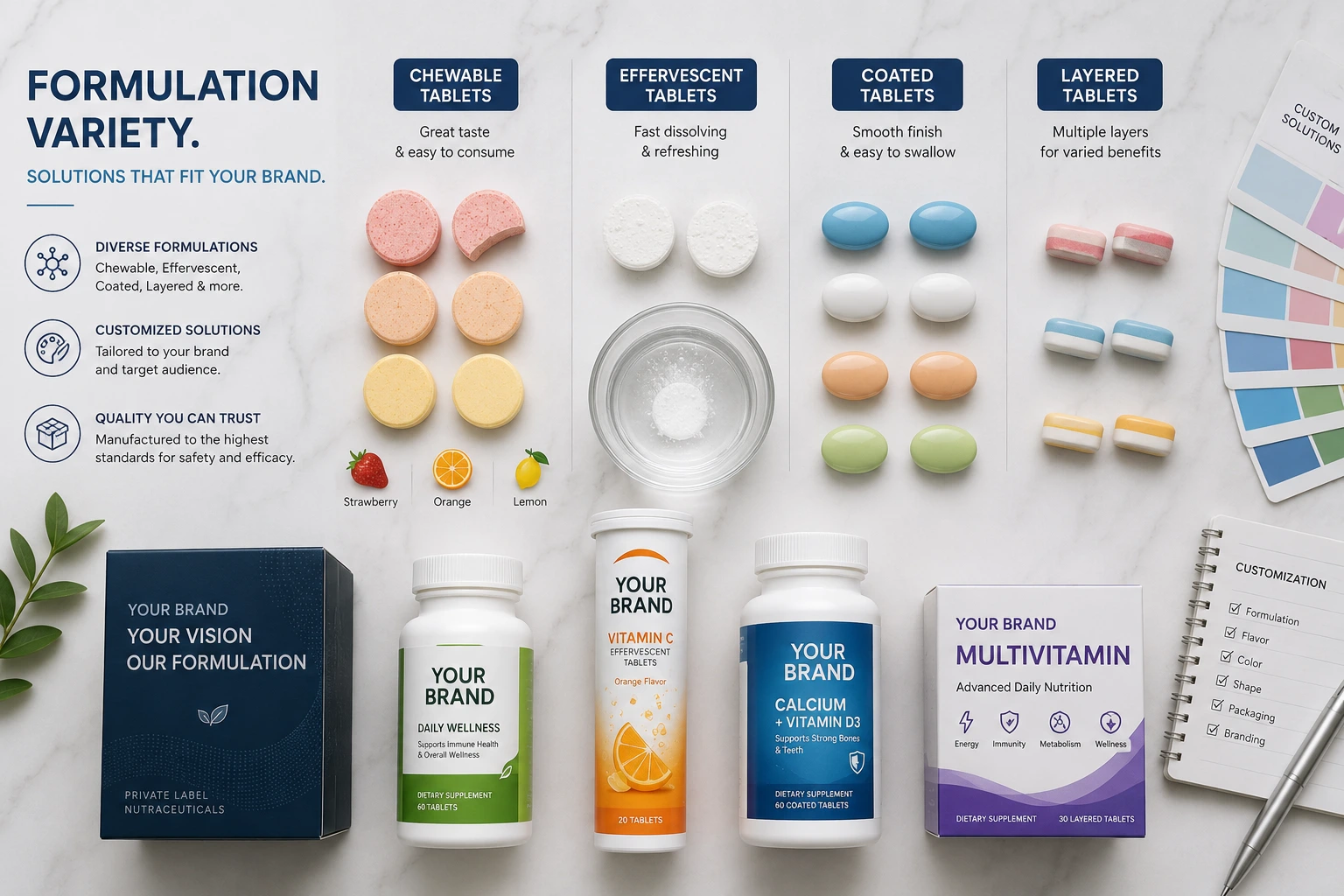
Custom Supplement Formulation enables brands to select ingredient combinations, dosage formats, and delivery systems that align with scientific rationale and market positioning.
Regulatory Compliance & Quality Standards
Immune health products sold in the United States must comply with dietary supplement regulations. To ensure product integrity, facilities must operate under documented GMP Manufacturing systems.
Quality systems should include:
- Raw material identity verification
- Supplier qualification programs
- Batch record documentation
- Stability testing
- Accurate and compliant labeling
Dietary supplements cannot claim to diagnose, treat, cure, or prevent disease.
How to Differentiate Your Immune System Supplement Brand?
The immune category includes several competing products. To build credibility, emphasize clarity and substantiation. Brands can differentiate by choosing to:
- Use clinically supported ingredient dosages
- Select standardized or research-backed extracts
- Provide transparent sourcing documentation
- Adopt clean-label strategies
- Implement third-party verification testing
- Offer stable and convenient delivery formats
Future Trends That Can Be Observed in Immune System Supplement Manufacturing
Delivery format innovation continues to expand. Research shows that approximately 49% of Millennials prefer supplement formats other than traditional pills and capsules.
Alternative formats include:
- Effervescent tablets
- Orally disintegrating tablets
- Gummies
- Functional beverages
- Powder sticks
Brands must offer new formats that consumers want. They must also make sure the ingredients stay stable and meet all regulatory standards.
Your Path to Scalable Production
Immune health remains a strong and stable segment within the supplement industry. Brands that seek to develop immune system support supplements must prioritize scientific accuracy, dosage precision, and regulatory alignment.
To achieve consistency and scale, brands benefit from partnering with a U.S.-based, FDA-registered, GMP-compliant manufacturer capable of Custom Supplement Formulation and controlled GMP Manufacturing. There is a structured approach to ingredient validation, stability management, and documented quality systems. This supports long-term brand growth in the immune health category.
F.A.M.E. Health Labs is an FDA-registered and GMP-compliant supplement manufacturer with in-house production of capsules, tablets, powders, gummies and liquids. We produce immune health supplements in capsules, powders, gummies, and other delivery formats. Our support extends to brands with structured manufacturing processes, documented quality systems, and scalable production. There is consistency from product development to large-scale manufacturing.
FAQs
What is an immune system supplement?
An immune system supplement is a dietary supplement. It is formulated with vitamins, minerals, botanicals, probiotics, or other nutrients. These support normal immune function. The products are designed to support both innate and adaptive immunity.
Which ingredients are commonly used in immune system supplements?
Vitamin C, vitamin D, zinc, selenium, elderberry, beta-glucans, probiotics and NAC are the common ingredients. The list also includes selected botanicals such as astragalus and turmeric.
What supplement formats are best for immune system products?
Capsules and tablets are quite common. However, effervescent tablets, orally disintegrating tablets, gummies, and powders are gaining popularity. This is due to convenience and consumer preference.
Can immune system supplements be manufactured under private label?
Yes. Many manufacturers offer private label production alongside Custom Supplement Formulation services. Products must comply with regulatory and GMP Manufacturing requirements.
What trends are shaping immune system supplement manufacturing?
Brands now choose ingredients that have research behind them. They want clear proof of where raw materials come from. Formats like gummies and effervescent tablets are becoming more popular. Manufacturers also follow strict GMP Manufacturing rules and review product claims more carefully.
What Do You Need?

Contract Manufacturing
Full-service supplement manufacturing from stock to custom white label, private label, co-manufacturing, and bulk.






Ingredient Sourcing
Global raw material sourcing, proprietary blend development, MOSA Organic, Halal and Kosher flavor systems.


Testing & CRO
ISO/IEC 17025 accredited testing ingredient and finished product. COAs accepted globally by FDA, Health Canada, and EU.



Enterprise Partnership
Full-platform commercial partnership for high-volume brands. Dedicated team, VP-level account management, real-time portal.

Most Viewed Posts