// Blog post
All You Need to Know About Magnesium Stearate in Supplements

Table of Contents





Recent Posts
Popular posts
Certifications





Magnesium stearate is one of the most common excipients in supplement manufacturing. It is a lubricant: a small amount keeps powder from sticking to tablet presses and capsule fillers, so every tablet or capsule comes out the same weight and dose. This guide explains what it is, what it does in a formula, and what brand owners should know before they put it on a label.
Key Takeaways
- Magnesium Stearate Improves Manufacturing Efficiency: As a lubricant and flow aid, it stops ingredients from sticking to equipment and keeps tablet and capsule production running smoothly. That supports consistent dosage and product quality.
- The Amount Matters: A small amount is enough. Too much, or over-mixing, can make tablets softer and slow how fast they break down and dissolve, so formulators set the level carefully.
- It Is Widely Used and Well Studied: Magnesium stearate is on the FDA's list of substances generally recognized as safe (GRAS). It is usually made from vegetable sources and is used in supplements, medicines and cosmetics.
What is Magnesium Stearate?
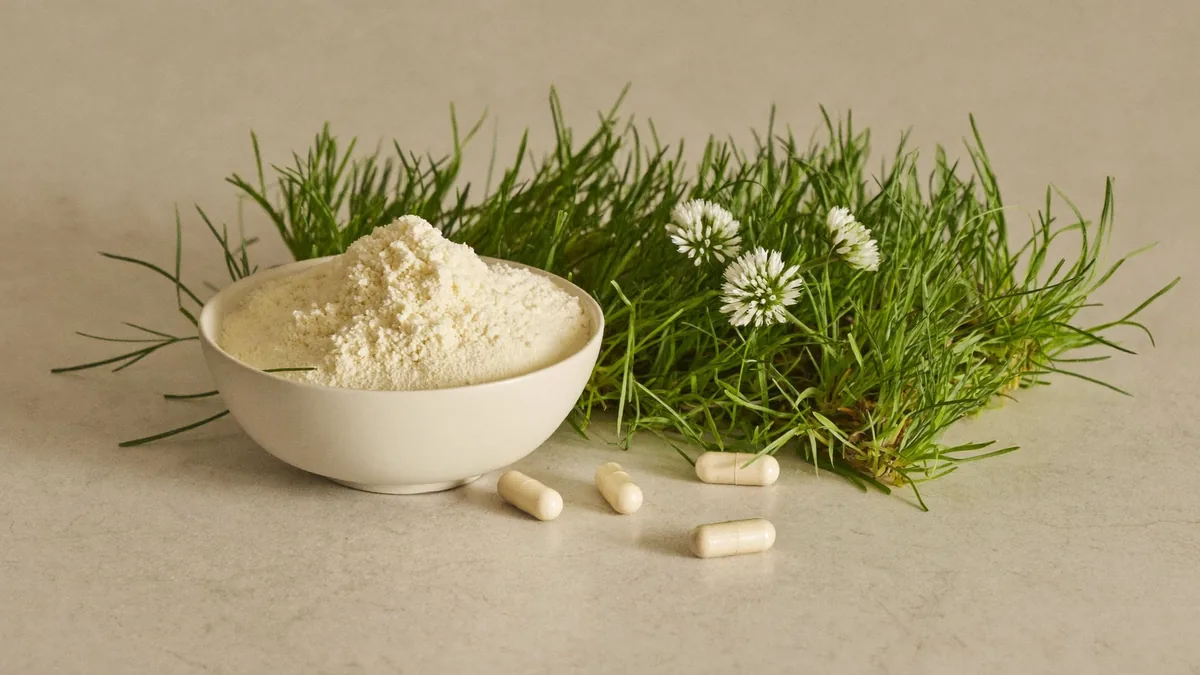
Magnesium stearate is a salt of magnesium and stearic acid, a fatty acid found in many plant and animal fats. It is a fine white powder. Most supplement grades are made from vegetable sources such as palm or cottonseed oil. Supplement and pharmaceutical manufacturers use it because it keeps ingredients from sticking to manufacturing equipment.
How Does Magnesium Stearate Support Supplement Quality?
Its lubricating properties reduce friction in the press and the capsule filler. That helps keep tablets and capsules formulations uniform, so each unit carries the same amount of each ingredient. Consistent production is also what lets a batch meet its label claim and its specifications.
Explore the Various Uses of Magnesium Stearate
Lubricant in Supplement Manufacturing
Magnesium stearate stops raw materials from sticking to punches, dies and filling equipment. Production runs more smoothly, quality stays consistent and machines wear less.
Prevents Clumping of Powders
It reduces the tendency of particles to stick together, which keeps the blend free-flowing. A free-flowing blend spreads ingredients evenly through every batch.
Flow Agent for Consistent Dosage
Because the blend flows evenly through the equipment, each tablet or capsule gets the right amount of each ingredient. That is the basis of consistent dosage.
Supports Tablet Compression
During compression, magnesium stearate lowers friction between the powder and the press. Tablets release cleanly from the die and reach the target hardness without chipping or sticking.
Effect on Disintegration and Dissolution
Magnesium stearate repels water. At the right level it has little effect on how a tablet breaks down. At high levels, or after long mixing, it can coat particles and slow disintegration and dissolution. Good formulators test for this and use the lowest amount that still does the job.
Benefits of Magnesium Stearate
Supports Consistent Product Quality
By keeping the blend uniform and preventing sticking, magnesium stearate helps fill capsules and press tablets evenly. That consistency is what delivers the same dose in every unit.
Improves Manufacturing Efficiency
Less friction means faster, smoother runs, fewer stoppages to clean sticky tooling and less wear on equipment.
Protects the Finished Product
Magnesium stearate is not a preservative. It helps by producing tablets and capsules that hold together well. Shelf life itself depends on the full formula, the packaging and stability testing.
Binding Agent in Cosmetics
In cosmetics, magnesium stearate helps powders hold together and spread smoothly. It is common in pressed powders.
Partner with F.A.M.E. Health Labs for Supplement Manufacturing
F.A.M.E. Health Labs manufactures capsules, tablets, powders and liquids in-house on our campus in Cedartown, Georgia, in an FDA-registered, cGMP, NSF GMP and SQF certified facility. Our formulators decide whether a formula needs magnesium stearate, and how much, based on the ingredients and the format. We offer custom supplement formulation from 2,500 units, 400+ stock formulas from 1,000 units, and packaging solutions with label compliance review. CURI, our ISO 17025 sister lab on the same campus, handles testing and stability studies.
Final Thoughts
Magnesium stearate is a small part of most tablet and capsule formulas, but it does real work: it keeps production consistent and each dose accurate. Used at the right level, it has little downside. A good supplement manufacturer will explain why it is in your formula and how much it uses.
FAQs
How does magnesium stearate improve the shelf life of supplements?
Mostly indirectly. Magnesium stearate is a lubricant, not a preservative. It helps produce well-formed tablets and evenly filled capsules that hold up in the bottle. Shelf life depends on the whole formula, the packaging and stability testing.
Can magnesium stearate be used in organic supplements?
Not in products labeled "organic." Under the USDA National Organic Program, magnesium stearate is allowed only in products labeled "made with organic (specified ingredients)" (7 CFR 205.605). Brands making an "organic" claim use other flow agents, such as organic rice-based alternatives.
How much magnesium stearate is typically used in supplements?
Only a small amount, usually a low single-digit percentage of the formula or less. The exact level is set during formulation, because too much can slow how fast a tablet breaks down and dissolves.
// Our Services
What Do You Need?
Select the service that matches your need. Each card expands to show what's included, minimum orders, and certifications then routes you directly to the right section of the form below.

F.A.M.E. Health Labs
Contract Manufacturing
Full-service supplement manufacturing from stock to custom white label, private label, co-manufacturing, and bulk.
See Services






F.A.M.E. Ingredients
Ingredient Sourcing
Global raw material sourcing, proprietary blend development, MOSA Organic, Halal and Kosher flavor systems.
See Services

Curí Inc.
Testing & CRO
ISO/IEC 17025 accredited testing ingredient and finished product. COAs accepted globally by FDA, Health Canada, and EU.
See Services

F.A.M.E. Complete
Enterprise Partnership
Full-platform commercial partnership for high-volume brands. Dedicated team, VP-level account management, real-time portal.
See Services